
-
CALL US 0203 883 4777
Explained VAT Inclusive & Exclusive Prices

When identifying the amount of VAT charged, it is important to distinguish between VAT inclusive and VAT exclusive prices. A VAT inclusive price includes VAT at the prevailing rate.
When a VAT registered business issues an invoice to their customer they must ensure that they charge the correct rate of VAT. Whilst most businesses in the UK charge VAT at the standard rate of 20% there are a number of different VAT rates and exemptions to consider. This includes the reduced VAT rate of 5%.
A VAT exclusive price is the price of goods or services before VAT is added. The use of VAT exclusive prices should only be used when the prices are aimed at buyers who can recover any VAT charged, for example ‘trade prices’ for businesses. Even when VAT exclusive prices are quoted it is important to ensure that there is a prominent statement indicating the amount or rate of VAT that will apply.
In order to work out how much VAT is included in a VAT inclusive price you need to divide the price including VAT by 1 + VAT rate. For example, to work out a price excluding the standard rate of VAT (20%) divide the price including VAT by 1.2 and if VAT was charged at 5% then the total is divided by 1.0
Likewise, if you want to calculate a VAT inclusive price, for a standard rated (20%) transaction, you would multiply the price excluding VAT by 1.2 and for a reduced rate (5%) price you would multiply the price by 1.05.
Recent Posts

Taking Money Out of a Limited Company: Salary, Dividends and Director’s Loans Explained (2026/27)
Director reviewing salary and dividend figures for taking money out of a limited company on a laptop and desk documents
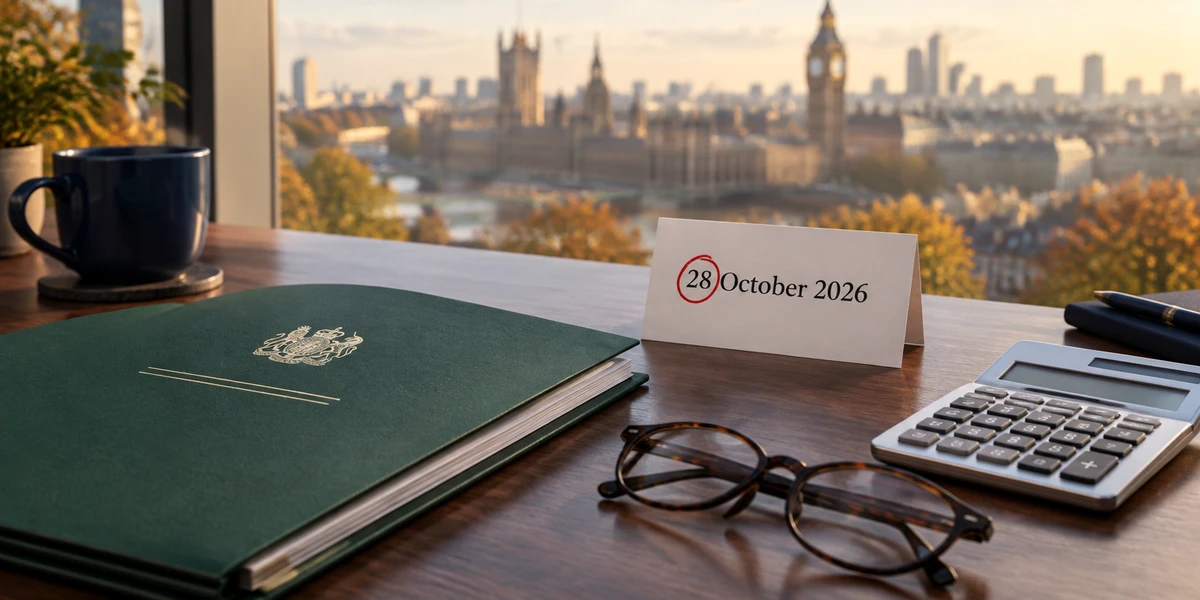
Autumn Budget 2026 Date Confirmed for 28 October
The Chancellor, John Healey, will deliver the Autumn Budget 2026 on Wednesday, 28 October, HM Treasury has confirmed. The confirmed...

Director Tax Return 2025/26: New Self Assessment Rules for Close Company Directors
If you run an owner-managed or family company, your director tax return 2025/26 asks for more information than ever before....

What Happens to Your Personal Allowance over £100,000 Income?
For UK taxpayers asking “What happens to my Personal Allowance if I earn over £100,000?”, the answer depends on HMRC’s...
Can You Reclaim VAT on Transaction Fees in the UK
Most businesses ask this as a yes-or-no question, but UK VAT does not work that neatly. Whether a business can...

Business Rates Relief 2026: Could the Threshold Increase?
The current relief thresholds have not changed. Business rates relief 2026 has not adopted a £17,096 exemption threshold. A newspaper...

What the HMRC Distributions Consultation 2026 Means for Company Owners
Company directors considering a share buyback, capital reduction or restructuring now have another factor to consider. HMRC’s consultation, “Modernising the...

Is the UK Tax System Too Complex for Small Businesses in 2026?
For many small businesses, keeping up with tax now means managing several filing cycles, digital reporting requirements and separate payment...
Comprehensive Guide to LLP Benefits and Disadvantages
A business with two or more owners may want the flexibility of a partnership without exposing every member to the...
How to Avoid Common Errors in VAT for Auto Repair Shops
Auto repair shops in the UK often handle parts sales and labour charges for the same job. While this is...