
-
CALL US 0203 883 4777
Zero-Rated VAT on Hair Loss Treatments: Mark Glenn Ltd v HMRC Explained
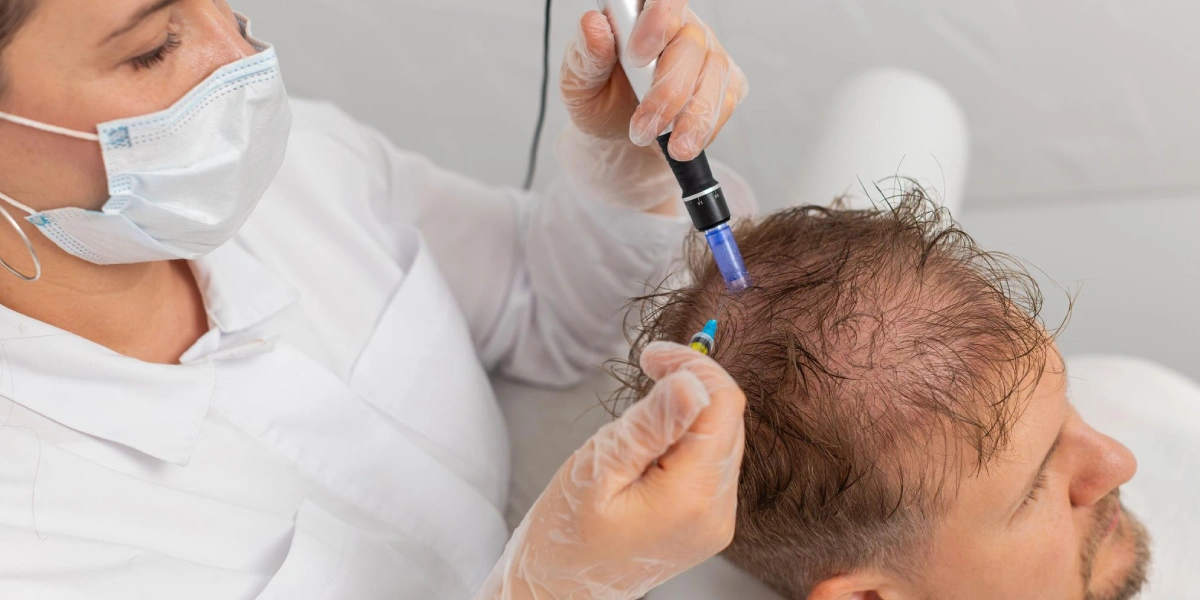
In January 2026, the Upper Tribunal (Tax and Chancery Chamber) issued a landmark ruling on VAT for hair-loss treatments. In Mark Glenn Ltd v HMRC, the court held that a specialised hair-loss service for women could be zero-rated. Mark Glenn Ltd provided the “Kinsey System” – a custom wig fitted over bald patches, with natural hair woven into it – and had treated this supply as 0% VAT. HMRC challenged that, saying it was a standard-rated service. The FTT initially agreed with HMRC, but on appeal the UT sided with the company.
Key outcome of the VAT on hair transplant case:
The Tribunal decided the Kinsey System supplies were made for disabled persons (women with severe hair loss) and involved adapting goods to their condition. This meant each supply fell within Item 3 of Group 12, Schedule 8 of the VAT Act 1994 and was therefore zero-rated. In other words, severe hair loss in these women counted as a “disability,” and the custom wig service was an adaptation for that disability.
The Kinsey System for Hair Loss
The Kinsey System is a bespoke hair replacement service. In practice:
- A custom-made wig is placed over a bald or thinning area. A fine wig-mesh backing is used where needed.
- Any remaining natural hair is pulled through the mesh alongside the wig’s hair (often using a small hook or needle). This makes the client’s own hair appear to grow through the wig.
- The wig is then trimmed and styled. The effect is that healthy hair isn’t shaved or hidden but is integrated with the wig as a “second skin”.
- Clients return roughly every 4–6 weeks for maintenance. During these visits, stylists adjust and secure the hairpiece to fit the client’s new hair growth (e.g., re-anchoring it to the natural hair).
None of this involves any surgery or medicine – it’s a highly skilled cosmetic service. Mark Glenn Ltd always treated it as a supply of services (not goods) for VAT purposes.

VAT Relief for Disabled Persons
Under UK VAT law, certain goods and services for disabled people can be zero-rated. In particular, Group 12, Schedule 8 of the VAT Act 1994 offers relief. Item 3 of Group 12 says the following supplies can be zero-rated:
“Services of adapting goods to suit the condition of a disabled person.”
Here, a disabled person is defined broadly as “any person who is chronically sick or disabled”. HMRC’s guidance (Notice 701/7) explains that this generally means someone with a long-term physical or mental impairment that substantially affects daily life or a condition recognised as chronic by doctors (for example, diabetes). The term “disability” is not limited to listed illnesses; it uses its ordinary meaning, taking into account the full impact on the person’s life.
Practically, many hair-loss-related aids are already zero-rated (for example, wigs for alopecia or post-chemotherapy patients are treated as medical aids for the disabled). The Mark Glenn case tested whether the more complex Kinsey System falls under the same relief.
VAT on Hair Transplants Case – First-Tier Tribunal Findings
The First-tier Tribunal (FTT) originally sided with HMRC. It found that:
- Female baldness was not itself a disability: The FTT said significant hair loss in women is “not, in itself, a disability.” It noted baldness is not an impairment or chronic illness and does not physically prevent normal activities.
- Kinsey System was more than an adaptation: The FTT saw the Kinsey System as a single, labour-intensive service (including regular styling and maintenance), not just the adaptation of a wig. In their view, carving part of that service into “adapting goods” would be an artificial split.
On that basis, the FTT concluded the supplies were standard-rated and dismissed the appeal.
Upper Tribunal Ruling
The taxpayer appealed. The Upper Tribunal disagreed with the FTT on two key issues:
Severe hair loss as a disability:
The UT held that “severe hair loss in women constitutes an impairment that adversely affects the ability to carry out everyday activities.” It recognised that the problem is not physical inability but “the distress that would ordinarily be experienced by a woman with severe hair loss” if her condition were untreated. The judgement emphasised the cultural importance of hair to female identity and how society treats hair loss. Because of those factors, women with baldness or patchy hair loss (not merely thinning) were found to be “disabled” for VAT purposes. The court noted that it was only considering severe, patchy loss in women, not other appearance issues.
Adaptation of goods:
The UT also found the Kinsey System was indeed an adaptation service under Item 3. The process of fitting, styling, and maintaining the wig was carried out to suit each disabled client’s condition, specifically the lack of hair. VAT relief on wigs becomes important here, as it may apply where the supply is linked to a qualifying disability. The wig’s construction and the placement of individual hair strands were tailored to each woman’s hair pattern. Even the maintenance, including readjusting anchor points, was viewed as adapting the device to the client’s remaining hair. In short, although sold as one overall service, it involved adapting a hairpiece to the disabled person.
Result:
Each Kinsey System supply fell within Item 3 of Group 12, so the UT declared them zero-rated. The appeal was allowed, and HMRC’s VAT demands were quashed.
What Does This Mean for Businesses?
For firms in the hair-loss or medical-aids business, this ruling has important implications:
Zero-rating now applies to eligible sales:
If you supply custom hair-replacement systems to women with serious hair loss (alopecia, etc.), you can treat those sales as 0% VAT – as long as the client is truly disabled by their hair loss. The Mark Glenn case essentially confirms that such clients meet the “chronically sick or disabled” test.
Gather proper evidence:
To claim zero-rating, continue to follow Notice 701/7 practices. Obtain a written declaration from each customer stating that they need the system for a disabling condition. Keep any supporting medical notes or references. If HMRC audits you, these documents prove the sale was for a disabled person’s use. Remember, the relief is for personal use by the disabled individual, not for someone buying it for general use.
Be clear on adaptation:
This case shows that complex systems can count as “adapting goods.” Other businesses should review if similar services (like integrating natural hair with medical hairpieces) might now qualify. The key is that the product is customised to the user’s condition. Simple off-the-shelf wigs for medical reasons are already zero-rated as appliances, but now bespoke fitting and maintenance services also clearly qualify.
Scope limits:
The decision is confined to the facts – it dealt with women with severe, patchy hair loss. It does not automatically make every hair-loss product zero-rated. For example, male pattern baldness or mild thinning were not part of this case. Use caution and consider whether each client truly has a serious medical condition.
No change to fundamentals:
VAT can’t be charged if criteria aren’t met. If a hairpiece is provided to someone without a qualifying condition, standard VAT (20%) still applies. The new ruling simply means more suppliers can justify zero-rating when the situation fits Group 12 requirements.
Many UK wig suppliers already offer VAT-free sales to alopecia patients (where the wig is worn for medical reasons). The Mark Glenn judgement provides legal backing for that practice and extends it to more advanced hair-loss systems. If you were previously uncertain about zero-rating such services, this case gives clarity.
You may want to review past VAT returns (within the allowable period) to see if any corrections are due. Going forward, ensure your contracts, invoices, and customer paperwork clearly reflect the disability relief.
How We Help Businesses Deal With VAT
At Apex Accountants, we keep abreast of changes like this so your business doesn’t miss out on legitimate tax relief. Our VAT and tax experts can help you:
- Review whether your hair-loss products or services qualify for zero-rating.
- Set up correct pricing and invoicing (with 0% VAT) for eligible supplies.
- Draft and file customer eligibility declarations in line with HMRC rules.
- Assist with any VAT audits or appeals, citing cases like Mark Glenn Ltd v HMRC.
- Train your staff on identifying disabled-person reliefs for goods and services.
Staying compliant with VAT legislation can save your clients money. We can advise on the specifics of Group 12 reliefs and ensure your approach is fully supported by the latest case law.
Conclusion
The Mark Glenn decision confirms that custom hair-loss treatments for disabled women may be zero-rated VAT. Businesses should review their supplies of wigs and hair systems for VAT exemption. If a patient’s severe baldness meets the disability criteria and the service involves adapting a hairpiece to that condition, you can charge 0% VAT. Proper records and customer declarations are essential. If you have any questions about VAT on medical or disability-related products, our team is here to help.
FAQs
1. Is there VAT on hair transplants?
Hair transplants are usually exempt from VAT when they are carried out for medical purposes by a qualified healthcare professional. However, if the procedure is purely cosmetic, HMRC may treat it as a standard-rated service at 20% VAT.
2. Do you pay VAT on beauty treatments?
Most beauty treatments, including cosmetic procedures and non-medical services, are subject to VAT at the standard rate of 20%. Only treatments that meet strict medical criteria or qualify under specific relief rules may be exempt or zero-rated.
3. What does hair loss treatment cost?
Hair loss treatment costs vary depending on the type of service, level of customisation, and maintenance required. Costs can range from a few hundred pounds for basic solutions to several thousand pounds for bespoke systems with ongoing care.
4. What conditions qualify for VAT relief?
VAT relief applies to individuals who are chronically sick or disabled, meaning they have a long-term condition that significantly affects daily activities. This may include medical conditions such as alopecia, cancer-related hair loss, or other recognised impairments.
5. How to avoid VAT on hair loss treatment?
VAT is not simply avoided but may be reduced to 0% if the treatment qualifies under disabled person relief rules. The supply must be for personal use by a qualifying individual and supported by appropriate documentation and declarations.
6. Is VAT charged on hair loss treatment costs?
Hair loss treatment is normally subject to 20% VAT. However, it may be zero-rated where it involves adapting goods for a disabled person and meets the criteria set out in VAT legislation and HMRC guidance for relief.
7. How to get VAT relief on hair loss treatment?
To obtain VAT relief, the treatment must qualify under disability rules. The customer usually needs to provide a written declaration confirming their condition, and the supplier must keep evidence that the service is for personal use.
Recent Posts

A Complete Guide On SIPP Inheritance Tax 2027 and Unused Pension Funds
From 6 April 2027, the SIPP inheritance tax 2027 rules will change how HMRC treats unused pension funds for inheritance...

eBay HMRC Reporting: UK Tax Rules Every Seller Should Know
Selling on eBay is more popular than ever. From part-time resellers to full online shops, thousands of people across the...

Everything You Need to Know About Director’s Loan Write-Off and the Douglas Boulton Case
In a 2026 tax appeal, the First-tier Tribunal (Tax) upheld HMRC’s view that a written-off director’s loan triggers an income...

Recover Cash From Unpaid Invoices: VAT Bad Debt Relief for UK Businesses
VAT bad debt relief can help VAT-registered businesses recover VAT already paid to HMRC when customers fail to settle qualifying...

Rachel Reeves’s Property Tax Plan Explained
Rachel Reeves’s property tax plan introduces a series of reforms designed to reshape the UK housing market. The proposals affect...

Claiming R&D Tax Relief for Product Design Companies
UK product design companies spend serious money on prototypes, testing and new materials. R&D tax relief for product design companies...

HMRC Automatic Bank Deductions: What Beneficiaries Must Know Now
Many people across the UK now want clear answers about HMRC automatic bank deductions. The question has grown urgent due...

Understanding Connected Person SEIS: Rules & Eligibility
The Seed Enterprise Investment Scheme (SEIS) provides significant benefits to investors. However, understanding the concept of being ‘connected’ to the...

Autumn Budget 2026 Date Confirmed for 28 October
The Chancellor, John Healey, will deliver the Autumn Budget 2026 on Wednesday, 28 October, HM Treasury has confirmed. The confirmed...

HMRC Selects Cloud SAP to Modernise its Core Tax Platform
HMRC selects cloud SAP to rebuild the technology that underpins the UK’s tax administration. The existing Enterprise Tax Management Platform...