
-
CALL US 0203 883 4777
What Businesses Need to Know About the Mandatory Electronic Invoicing in the UK
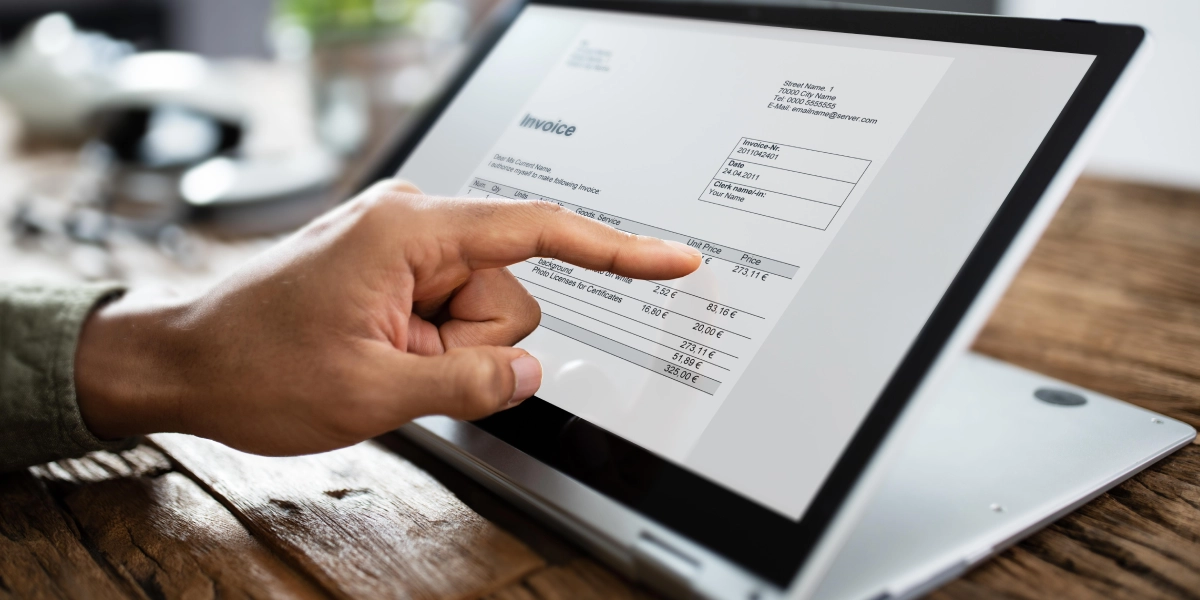
Electronic invoicing (e-invoicing) is moving from a digital option to a legal requirement in the UK. Following extensive consultation with businesses, the UK government confirmed in Budget 2025 that mandatory electronic invoicing will apply to all VAT-registered companies. From 1 April 2029, businesses will be required to issue electronic invoices for business-to-business (B2B) and business-to-government (B2G) transactions.
Budget 2026 will publish a detailed roadmap outlining the technical standards and phased approach. In the meantime, it is sensible for businesses to understand what e-invoicing is, why the rules are changing, how it affects them and what they can do now to prepare.
What Is E‑Invoicing?
E‑invoicing is more than sending a PDF by email. It involves issuing invoices in a structured, machine‑readable format that can be read directly by the recipient’s accounting system without manual intervention. The process automates the creation, transmission and posting of the invoice, ensuring authenticity and preventing unauthorised modifications.
Traditional Invoicing vs. Electronic Invoicing
| Traditional Invoicing | Electronic Invoicing |
| Paper invoices or PDF files sent by post or email | Structured digital data instead of unstructured PDFs or paper |
| Manual sending and receiving of invoices | Direct system-to-system exchange via recognised networks such as Peppol |
| Manual data entry into accounting software | Automatic recording in accounting software without manual re-typing |
| Limited visibility and higher risk of errors | Improved audit trail and easier cross-checking for compliance |
The government plans to adopt a decentralised “four‑corner” model, likely using the Peppol network, rather than a centralised government portal. Businesses will therefore choose approved software or service providers to connect to the network.
Why Is the UK Moving to Mandatory E‑Invoicing?
The UK government has acknowledged that voluntary e-invoicing adoption remains low and fragmented. A mandatory scheme aims to unlock benefits already seen in other countries. The following insights are based on official consultation results and subsequent commentary:
- Improved accuracy and fewer manual errors – digital invoicing eliminates re‑keying mistakes.
- Reduced administrative costs – automation lowers processing time and administrative burden.
- Faster payment and healthier cash flow – structured invoices help buyers validate and pay invoices more quickly.
- Better VAT compliance – standardised data formats simplify VAT reporting and reduce fraud.
- Alignment with global trends – more than 130 countries have already introduced or are planning e‑invoicing mandates.
The government believes that without a mandate, the UK risks lagging behind its trading partners and missing out on productivity gains.
Timeline and Scope of the UK E‑Invoicing Mandate
- Effective date: All VAT‑registered businesses must issue and receive structured e‑invoices for VAT invoices from 1 April 2029.
- Transactions covered: Business‑to‑business (B2B) and business‑to‑government (B2G) transactions where VAT is due.
- Transactions excluded: Business‑to‑consumer (B2C) transactions are not in scope initially.
- Model: A decentralised four-corner model, likely based on the PepPol network, has been chosen.
- Real‑time reporting: Real‑time transmission of invoice data to HMRC (continuous transaction controls) will not be part of the 2029 launch. It may be considered in later phases.
- Roadmap: A detailed implementation roadmap and technical standards will be published at Budget 2026; stakeholder engagement begins in January 2026.
Benefits of E‑Invoicing for UK Businesses
The consultation response and industry analysis show that the benefits of e-invoicing are substantial, delivering clear operational, financial, and compliance advantages for UK businesses.
- Faster processing and reduced administrative overhead.
- Fewer errors and stronger audit trails.
- Enhanced VAT compliance and reduced fraud exposure.
- Improved cash flow and shorter payment cycles.
- Improved data quality for analytics and decision‑making.
- Reduced environmental impact – structured invoice files are smaller and require less data processing.
For companies handling thousands of invoices, these gains can translate into significant cost savings and productivity improvements.
Challenges and Concerns Raised by Businesses
While the benefits are clear, businesses have voiced legitimate concerns:
- Implementation costs for software upgrades and systems integration.
- Staff training and change management for finance teams.
- Integration with existing ERP systems and accounting workflows.
- Cybersecurity risks and data protection compliance.
- Ensuring interoperability between different providers and systems.
- Clarity over standards and timelines – businesses want early and detailed guidance.
The government acknowledges these issues and plans to provide tailored support, including low‑cost solutions and clear guidance.
Preparing Your Business for the 2029 Mandate
Although 2029 seems distant, early preparation reduces risk and spreads costs. Here is a sensible checklist for UK businesses:
- Map your current invoice processes. Understand how invoices are issued and received throughout your organisation.
- Assess your software. Evaluate whether existing ERP or finance systems can support structured e‑invoicing standards.
- Engage with providers. Discuss plans with your software vendors and explore integration options.
- Plan for integration. Identify gaps between your current workflows and the future e‑invoicing model; factor in data formats and archiving requirements.
- Train your team. Build knowledge of structured invoicing and ensure finance staff are comfortable with new procedures.
- Monitor HMRC updates. Keep an eye on the roadmap and technical standard announcements at Budget 2026.
- Consider international harmonisation. If your business operates cross‑border, align UK e‑invoicing preparation with EU or global standards like EN 16931 and Peppol.
Early adopters have time to test systems, iron out issues, and realise productivity benefits ahead of their competitors.
How Apex Accountants Can Help Businesses Adapt To Mandatory Electronic Invoicing in UK
At Apex Accountants, we specialise in helping UK businesses navigate regulatory change and maintain compliance. Our team is already supporting clients to prepare for the e‑invoicing mandate. We offer:
- E‑invoicing readiness assessments – reviewing current invoicing processes and system capabilities.
- Software selection and integration advice – helping you choose compliant e‑invoicing solutions and integrate them with existing ERP systems.
- Data mapping and standards alignment – ensuring your invoices meet EN 16931/Peppol standards (or other mandated formats).
- Staff training and change management – guiding finance teams through new workflows.
- VAT compliance and Making Tax Digital alignment – integrating e‑invoicing with MTD obligations to improve overall compliance.
- Ongoing support – monitoring HMRC updates, advising on phased rollout requirements and helping you adapt to future real‑time reporting.
Our goal is to turn a regulatory requirement into an opportunity for efficiency and growth.
Conclusion
The UK’s move to mandatory e‑invoicing is a major step in modernising tax administration. Starting from 1 April 2029, all VAT‑registered businesses will need to issue structured e‑invoices for B2B and B2G transactions. The government’s consultation, and the feedback it gathered, make clear that e‑invoicing delivers real benefits – from improved accuracy to faster payments – but also that businesses need time to adapt.
Preparing early will minimise disruption and allow you to leverage the advantages of digital invoicing ahead of the deadline. With the right planning and support, the mandate is not a burden but an opportunity to streamline your finance function.
Apex Accountants is here to help you navigate this change. Contact us today to get started with e‑invoicing and ensure you are ready for 2029 and beyond.
Common Questions on E-Invoicing from UK Businesses
Below are some of the queries UK businesses are searching and asking – along with clear answers based on official announcements and industry commentary.
When exactly will e‑invoicing become mandatory?
All VAT invoices must be issued electronically from 1 April 2029. A phased rollout may start with larger organisations first.
Does the mandate apply to small businesses?
Any business registered for VAT must comply, irrespective of size. Micro‑businesses below the VAT threshold that choose not to register will remain outside the mandate.
Will this replace Making Tax Digital (MTD)?
No. MTD requires digital records and API submissions of VAT returns but does not cover electronic invoicing. E‑invoicing complements MTD by improving the quality and reliability of the underlying invoice data.
Is real‑time reporting included?
Not initially. HMRC has confirmed that continuous transaction controls will not be introduced in 2029. Future phases may explore real‑time reporting once the e‑invoicing infrastructure is established.
Do B2C transactions need electronic invoices?
No. The mandate currently covers B2B and B2G invoices only.
What standards will be used?
The UK will likely align with European standard EN 16931 and use the Peppol network for interoperability. Final technical requirements will be clarified in the 2026 roadmap.
Will I need new software?
If your current system cannot produce or receive structured e‑invoices, you will need to upgrade or integrate with compliant solutions. Many existing PDF or email workflows are not adequate. Engage with software vendors early to ensure readiness.
How much will it cost?
Upfront costs may include software licences, integration and staff training. However, the government intends to work with software providers to ensure affordable solutions for small businesses. Long‑term savings from efficiency and reduced errors often offset initial investment.
What about security and data protection?
Structured e‑invoicing networks such as Peppol use secure, encrypted channels. Businesses should still review data governance procedures and choose reputable providers.
Recent Posts

Will IR35 Be Scrapped? The IR35 Changes and Replacement Pledge Explained
IR35 remains fully in force. The off-payroll rules still apply in full, and HMRC still expects a status determination for...

Off-Payroll IR35: What Are the Rules and How Do They Apply?
The off payroll IR35 rules, commonly known as IR35, apply to certain contractors who provide their services through an intermediary,...

Non-UK Directors Tax: What UK Companies Need To Know
Appointing a director who lives overseas can be a smart move. You gain experience, contacts, and strategic oversight. However, non-UK...

VAT Rules for Education Consultancies Made Simple for UK and International Student Support Providers
Understanding VAT rules for education consultancies is essential for any organisation that supports students with admissions, training, visa processing, or...

Employment Allowance UK: Employer NIC Relief Explained
Employment Allowance UK can reduce an eligible employer’s secondary Class 1 National Insurance contributions by up to £10,500. For businesses...

VAT Rules for Subscription-Based Online Learning Platforms in the UK
Online learning platforms continue to grow quickly. Current VAT rules and cross-border requirements directly affect subscription-based online learning platforms across...

Why You’re Losing Your £12,570 Personal Allowance
In the UK tax system, most workers benefit from the £12,570 Personal Allowance – the amount of income you can...

How to Handle VAT for Online Tutoring Companies: What’s Changing in 2026?
VAT for online tutoring companies is becoming increasingly complex, especially with HMRC’s changes taking full effect in 2026. Stricter rules...

The Importance of Seeking HMRC Tax Investigation Help From Professionals
Getting professional HMRC tax investigation help before an enquiry begins is one of the most effective ways to protect your...

Gifts to Spouse or Charity: Capital Gains Tax Rules
In most cases, there is no Capital Gains Tax (CGT) to be paid on the transfer of assets to a...