HMRC’s Strengthened Reward Scheme For Reporting Tax Fraud

The autumn Budget 2025 quietly introduced a powerful incentive for whistleblowers. From 26 November 2025, anyone who provides HM Revenue & Customs (HMRC) with credible intelligence about serious tax avoidance or evasion could receive a portion of the recovered tax. The Strengthened Reward Scheme is modelled on successful programmes in the United States and Canada and offers a significant change from the UK’s old discretionary payment system

Below we explain what tax fraud looks like, how the new scheme works, who is eligible, and how to report concerns.

What counts as tax fraud?

HMRC defines tax fraud as deliberately and dishonestly seeking a tax advantage by concealing or misrepresenting information. Fraud can take many forms, for example:

  • Submitting false returns – intentionally misstating income or expenses.
  • Falsely claiming refunds or reliefs – inventing deductions or reliefs you are not entitled to.
  • Hiding income or wealth offshore – moving money abroad or using complex structures to conceal profits.
  • Smuggling taxable goods – importing or moving goods without declaring them or paying due duties.

The UK’s tax gap (the difference between tax owed and tax collected) was estimated at £46.8 billion in 2023–24. Tackling fraud helps fund public services and create a level playing field for honest businesses.

How the Strengthened Reward Scheme works

The new system offers a percentage-based reward for information that leads to the recovery of substantial unpaid tax. Key features include:

  • Reward range: Informants may receive 15% to 30% of the tax collected, excluding penalties and interest. For example, a tip that helps recover £2 million could yield a payment of £300,000–£600,000.
  • Minimum threshold: The information must lead to HMRC collecting at least £1.5 million in tax. HMRC says such cases usually involve large companies, wealthy individuals or complex offshore arrangements.
  • No upper cap: There is no maximum payout – the award increases with the tax recovered.
  • Discretionary payment: Unlike US programmes, HMRC retains discretion. A reward is not guaranteed even if the threshold is met.
  • Transparent criteria: HMRC publishes factors that determine the final percentage, such as the quality of information provided and the whistleblower’s assistance during the investigation.

This approach is intended to encourage insiders to come forward with high‑quality intelligence while maintaining flexibility for HMRC to manage the scheme.

Eligibility: Who Can and Cannot Claim a Reward

Who may qualify

You could be eligible for a reward if you:

  • Provide original, specific and verifiable information that HMRC does not already know.
  • Are not involved in the tax avoidance or evasion yourself.
  • Are not a current or former civil servant who obtained the information through your government role.
  • Submit the report under your own name (anonymous reports will be accepted but cannot receive payment).

Reasons you would not get a reward

HMRC sets out clear exclusions:

  • You are the taxpayer involved or were part of the scheme.
  • You obtained the information while working for the government or as a contractor.
  • The information could be found through HMRC’s routine processes.
  • You are acting on someone else’s behalf.
  • Providing the information would breach legal disclosure rules.
  • The reward might indirectly fund illegal activity.
  • You submit the report anonymously.

Even if you are ineligible for payment, HMRC encourages anyone with knowledge of tax fraud to report it.

How to Report Tax Fraud

HMRC’s online reporting tax fraud service is the channel for submissions. Here’s what you need to know:

  • Visit gov.uk/report-tax-fraud and complete the form.
  • Provide a detailed description of the activity (up to 1,200 characters) and explain how you learned about it, your relationship to the person or business, and how long it has been happening.
  • Estimate the total value of the suspected fraud.
  • Tell HMRC about any supporting documents; attachments cannot be uploaded but you can describe them.
  • Do not try to gather more evidence yourself, encourage anyone to commit a crime, or let others know you are making a report.
  • After submission, HMRC will acknowledge receipt. They will contact you only if more information is required or if you are eligible for a reward.
  • Investigations can take years; payment is only possible once the case concludes.

Implications of Whistleblowing Reward Scheme for Businesses and Individuals

The Strengthened Reward Scheme is part of a broader drive to tackle tax non‑compliance. HMRC has also announced new powers against promoters of avoidance schemes and plans to establish a dedicated small‑business evasion team. Corporate entities face criminal liability for failing to prevent tax evasion under the Criminal Finances Act 2017, with recent prosecutions reinforcing the need for robust controls. Businesses should therefore:

  • Review compliance frameworks to ensure they have adequate procedures to prevent tax evasion.
  • Assess whistleblowing policies so employees can report concerns internally before going to HMRC.
  • Prepare for increased HMRC scrutiny, especially if operating complex structures or within high‑risk sectors.

Individuals with knowledge of serious fraud should seek independent legal advice before making a disclosure Acting without guidance could put your employment or legal position at risk.

How Our HMRC Tax Investigation Services Can Help

At Apex Accountants we help clients navigate the complexities of HMRC’s new whistleblowing scheme and wider tax compliance. Our team of chartered tax advisers and forensic accountants can:

  • Advise on internal controls and compliance – reviewing your systems to minimise the risk of tax fraud and ensuring they meet HMRC’s six guiding principles.
  • Develop whistleblowing policies – creating confidential reporting channels and training staff so issues are addressed internally before external reports arise.
  • Assist with disclosures – supporting individuals and companies when making voluntary disclosures to HMRC, mitigating penalties and ensuring full cooperation.
  • Provide representation during HMRC investigations – working with you to supply information, negotiate settlements and protect your legal rights.
  • Offer strategic advice for whistleblowers – helping potential informants understand eligibility, prepare reports and seek legal protections.

Whether you are a business preparing for greater scrutiny or an individual considering a report, our experienced team can guide you through the process. Contact Apex Accountants today to discuss how we can help.

Conclusion

The UK’s whistleblowing reward scheme signifies a major step in closing the tax gap. By offering up to 30% of recovered tax to informants, the government hopes to encourage insiders to expose serious tax avoidance and evasion. Only cases recovering at least £1.5 million in tax qualify for the scheme, and rewards are discretionary. While this incentive could transform tax enforcement, it also puts pressure on businesses to ensure their tax affairs are beyond reproach. 

If you have concerns about tax compliance or need guidance on whistleblowing, speak to Apex Accountants for tailored, professional advice.

FAQs on Strengthened Reward Scheme

Is the reward guaranteed?

No. HMRC has sole discretion to decide whether to pay a reward and how much. It is not a statutory right, as it is in some US programs.

Can I remain anonymous?

Yes, you can report tax fraud anonymously via HMRC’s online form. However, anonymous whistleblowers will not receive a reward.

Do I need to gather evidence?

No. HMRC specifically asks whistleblowers not to seek additional information or encourage wrongdoing. Simply provide what you already know.

How long will it take to receive a reward?

Tax investigations are complex. HMRC warns that years may pass between sending a report and receiving any payment. The scheme is designed for high-value cases, which often require lengthy enquiries.

What if the tax recovered is less than £1.5 million?

Rewards are only considered when at least £1.5 million is collected. Smaller cases may still be investigated, but no payment is offered.

Who usually commits high‑value tax fraud?

The HMRC says such schemes often involve large companies, wealthy individuals, or offshore arrangements.

Will such an incident lead to a surge in baseless allegations?

Some commentators warn that the scheme could prompt more speculative reports. Law firms recommend businesses strengthen compliance frameworks and whistleblowing policies to manage risks and prepare for increased scrutiny.


How Rachel Reeves’ 2025 Tax Rises Will Affect Your Finances

Rachel Reeves’ Autumn Budget on 26 November 2025 confirmed a major tax rise across the UK.  As part of Rachel Reeves’ 2025 tax rises, the Office for Budget Responsibility (OBR) estimates an extra £26.1 billion a year in tax by the end of the forecast period. 

The overall tax burden is now forecast to reach 38.3% of GDP by 2030–31, the highest level in modern UK history, up from 36.3% in 2025–26. 

At Apex Accountants, we are already helping clients understand what this means in practice for wages, pensions, property income, savings, and long-term planning.

What Changed in the 2025 Budget?

Key points from the Autumn Budget summary and OBR report:

  • Around £26bn a year in extra tax once the measures are fully in place.
  • Tax-to-GDP ratio rising to 38.3% by 2030–31, a post-war high.
  • Income tax and National Insurance thresholds frozen for three extra years, now running to 2030–31.
  • New and higher taxes on:
    • Savings and investment income
    • Rental and property income
    • High-value homes over £2 million
    • Electric vehicles, via a new mileage-based road tax
  • Cash ISA allowance cut for many under-65s. 

The OBR has also trimmed its growth forecast. It now expects UK real GDP to grow around 1.5% a year on average over the next five years, lower than it predicted in March, partly due to weak productivity. 

Why is the UK Tax Burden Hitting a Post-War High?

Rachel Reeves Autumn Budget focuses on raising more from the existing tax base rather than lifting basic income tax or VAT rates.

Several factors sit behind this strategy:

High public debt and interest costs

  • Debt interest and long-term spending pressures on health, pensions, and social care remain heavy.

Tough fiscal rules

  • The government must show that debt will fall as a share of GDP in five years’ time.
  • The OBR now says Reeves has roughly £21.7bn of “headroom” against those rules, more than double the buffer it calculated in March.

Limited scope to cut spending quickly

  • Some departments see modest increases.
  • Deeper real cuts are pencilled in later in the decade and may be politically hard to deliver.

In short, the Budget shifts a larger share of the adjustment onto taxpayers, especially middle and higher earners, landlords, and wealthier households. 

Key Tax Changes And Who Pays More

Freeze on income tax and National Insurance thresholds

Reeves has extended the freeze on most personal tax thresholds until 2030–31, including: 

  • Personal allowance
  • Basic rate and higher rate income tax thresholds
  • Key National Insurance limits

Because wages usually rise over time, more income is dragged into tax or higher tax bands. This is called “fiscal drag”.

The OBR and independent analysts estimate that the freeze will:

  • Pull around 780,000 people into paying income tax for the first time.
  • Push roughly 924,000 people into higher-rate bands by 2030–31.

Who is affected?

  • Employees whose wages rise over the next five years
  • Self-employed with growing profits
  • Anyone close to the higher-rate or additional-rate thresholds today

Higher tax on savings interest and rental income

From April 2027, there will be a two-percentage-point rise in income tax on “unearned” income – mainly savings interest and rental income above the relevant allowances. 

New rates for income above the savings allowance are set to be:

  • 22% for basic rate taxpayers (up from 20%)
  • 42% for higher rate taxpayers (up from 40%)
  • 47% for additional rate taxpayers (up from 45%)

Who is affected?

  • Savers with large interest-bearing deposits outside ISAs
  • Landlords with personal rental income
  • Individuals with sizeable cash balances in high-interest accounts

Even a small rate increase can cut post-tax cash flow quite sharply, especially for landlords already restricted by mortgage interest rules. 

Dividend tax rises

From April 2026, tax on dividends outside ISAs will rise for many investors: 

  • Ordinary rate: 8.75% → 10.75%
  • Upper rate: 33.75% → 35.75%
  • Additional rate: stays at 39.35%

Who is affected?

  • Company directors taking profit as dividends
  • Share investors with portfolios outside ISAs
  • Landlords using limited companies to hold property

Cash ISA allowance cut for under-65s

From April 2027: 

  • Annual Cash ISA allowance for those under 65 falls from £20,000 to £12,000.
  • The overall ISA limit stays at £20,000, so more will need to be placed into stocks and shares ISAs or other types.
  • Over-65s keep the £20,000 cash allowance, subject to final rules.

Some reforms will also tighten transfers from stocks and shares ISAs into cash ISAs and introduce tests for “cash-like” investments. 

Who is affected?

  • Higher earners who use the full cash ISA allowance
  • Cautious savers who prefer cash rather than investment risk
  • Those who rely on ISAs to shelter interest from tax

Mansion tax on homes over £2 million

The Budget introduces a “mansion tax” – officially the High Value Council Tax Surcharge – on homes in England worth over £2 million. 

Key points:

  • Applies to homeowners, not tenants.
  • Paid on top of existing council tax bills.
  • Annual charge expected in bands, roughly between £2,500 and £7,500 depending on property value. 
  • The Valuation Office will run a targeted valuation exercise in 2026.
  • First bills likely from April 2028, with revaluations every five years.

Who is affected?

  • Owners of homes worth more than £2m in 2026
  • Many properties in higher-value parts of London and the South East
  • Some owners of country houses and estates elsewhere

New mileage-based tax on electric vehicles

From Spring 2028, electric car and plug-in hybrid drivers will face a per-mile road tax, sometimes called EV Excise Duty. 

Headline proposals:

The OBR expects the measure to raise about £1.1bn in 2028–29, rising further by 2030–31. 

Who is affected?

  • Private EV drivers from 2028
  • Businesses running electric fleets
  • Employees with electric company cars (though Benefit-in-Kind rules stay favourable)

Pensions and salary sacrifice

Rachel Reeves Autumn Budget scales back some of the generosity of pension tax advantages, with a focus on salary sacrifice (also called salary exchange): 

  • Extra National Insurance–style charges on some employer pension contributions via salary sacrifice.
  • Aim is to reduce the gap between taxed salary and tax-advantaged contributions for higher earners.
  • Details will phase in over several years and could change after consultation.

Who is affected?

  • Higher-earning employees using salary sacrifice to cut NICs
  • Employers with large salary sacrifice pension schemes
  • Professionals in sectors with generous pension packages

Who bears the brunt overall?

Independent analysis suggests: 

  • Middle and higher earners carry most of the extra tax, through frozen thresholds and higher tax on savings, dividends, and property.
  • Lower earners see some offset from:
    • Welfare changes, including the removal of the two-child limit for Universal Credit
    • Higher minimum wage
    • Support with energy bills
  • Landlords, investors, and high-value homeowners see a clear rise in effective tax rates.

What does this mean for you in practice?

Below are typical groups and how they may feel the changes.

Employees on PAYE

  • Pay rises between now and 2030–31 will be taxed more heavily.
  • You may move into higher-rate bands even if your living standard feels similar.
  • Child benefit and other threshold-based rules may bite earlier.

Self-employed and business owners

  • Profits that rise with inflation will pull you deeper into higher-rate tax.
  • Dividend increases will cut the net value of taking money from your company.
  • Cash held in business or personal accounts may attract more tax if interest is high.

Landlords

  • Personal landlords face:
    • Higher tax on rental profits from 2027
    • No relief for all mortgage interest, due to existing rules
  • Company landlords face higher dividend tax when extracting profits.

Savers and investors

  • High-balance cash savers see more interest taxed at 22%, 42% or 47%.
  • Investors outside ISAs lose more of their dividends to tax from 2026.

High-value homeowners

  • From 2028, many owners of £2m+ properties will pay the High Value Council Tax Surcharge each year.

Electric vehicle drivers

  • EV running costs rise, though they still tend to be cheaper than petrol or diesel once all taxes are considered.

Practical steps to consider now

This Budget does not only affect “the wealthy”. It shapes the tax position of almost every working adult over the next decade.

You may wish to review:

Pay structure and timing

  • Check whether bonus timing can help manage threshold effects.
  • Consider spreading income rather than bunching it in one tax year.

Use of ISAs

  • Make full use of current allowances before the cash ISA cut in 2027. 
  • Consider a plan for shifting more long-term savings into stocks and shares ISAs if suitable for your risk profile.

Pension contributions

  • Review salary sacrifice schemes and personal contributions.
  • Check whether moving to different contribution structures could preserve relief.

Property and landlord planning

  • Assess whether your rental portfolio works better in a company or in your own name.
  • Model the impact of the higher unearned income rates from 2027.

Home value and potential mansion tax

  • If your property is near the £2m mark, consider timing of major improvements and potential valuation disputes.

EV usage and business fleets

  • Build the pay-per-mile charge into cost projections from 2028.

Good planning cannot remove these tax rises. It can, however, reduce unnecessary leakage and support more stable long-term finances.

How Apex Accountants Can Help Navigate Rachel Reeves’ Autumn Budget Changes

At Apex Accountants, we help individuals and businesses respond to changes like the Rachel Reeves’ Autumn Budget 2025 with clear, practical advice.

We can support you with:

Personal tax reviews

  • Bespoke analysis of how the threshold freeze and new rates affect you.
  • Scenario planning for pay rises, bonuses, and business profit.

Landlord and property tax planning

  • Restructuring advice for personal and corporate landlords.
  • Cash-flow modelling under higher rental and dividend tax.
  • Guidance on the new mansion tax, including valuation disputes and payment strategies.

Savings, ISA, and investment tax advice

  • Planning for the cash ISA allowance cut.
  • Structuring portfolios between ISAs, pensions, and general accounts to reduce future tax.

Pension and salary sacrifice optimisation

  • Reviewing salary sacrifice schemes in light of the new rules.
  • Coordinating employer and employee contributions for long-term efficiency.

EV and company car strategies

  • Comparing petrol, hybrid, and EV options after the pay-per-mile charge.
  • Advising on company car policies, Benefit-in-Kind, and fleet planning.

Business tax and forecasting

  • Integrating all new measures into long-term cash flow and investment plans.
  • Helping you keep the business compliant while still backing growth.

If you would like a tailored review, we can walk through the numbers for your situation and set out clear next steps.

Conclusion

Rachel Reeves’ 2025 Budget marks a structural shift in how the UK raises revenue. This autumn budget summary highlights how the government is leaning on stealthier levers – frozen thresholds, wealth-related taxes, and higher rates on savings, dividends, and property – to raise money without lifting headline income tax rates.

For many households, the impact will not be dramatic in one single year. Instead, the effect builds steadily through the 2020s as wages, rents, and asset values rise into fixed thresholds and new charges begin.

Planning early can help you stay in control. Good records, clear forecasts, and structured tax planning make a real difference once these measures bite. Contact us today for tailored guidance on how to prepare for these changes.

FAQs – Rachel Reeves’ 2025 Tax Rises and What They Mean For You

1. What are the main tax changes in Rachel Reeves’ 2025 Budget?

The key changes include:

  • Extending the freeze on income tax and NI thresholds to 2030–31. 
  • A two-percentage-point rise in tax on savings interest and rental income from April 2027.
  • Higher dividend tax rates from April 2026.
  • A cut in the cash ISA allowance for under-65s to £12,000 from April 2027.
  • A new mansion tax on homes over £2m in England from 2028. 
  • A new per-mile EV tax from 2028.

2. How does freezing income tax thresholds affect my tax bill?

When thresholds stay fixed but earnings rise, more of your income:

  • Moves from untaxed to taxed
  • Or moves from basic to higher rates

The OBR expects hundreds of thousands more people to pay income tax or join higher-rate bands by 2030–31. 

Even if your headline tax rate does not change, the share of your income lost to tax usually increases.

3. Who will pay the new mansion tax?

The High Value Council Tax Surcharge applies to homes in England worth over £2 million in 2026 valuations. 

  • It is paid by homeowners, not tenants.
  • It sits on top of normal council tax.
  • Annual charges start around £2,500 and can reach about £7,500 or more for very expensive properties.

If your home is near the threshold, professional advice on valuation and appeals will be important.

4. How will the Budget affect landlords?

Landlords face several pressures:

  • Higher tax on rental profits from 2027 as property income joins the new 22%, 42%, and 47% unearned income rates.
  • Company landlords pay more when extracting profits as dividends, due to the higher dividend tax.
  • Existing mortgage interest restrictions remain in place. 

Many landlords may seek higher rents to offset their own higher bills, which could affect tenants.

5. What does the Budget mean for my savings and ISAs?

Key points for savers:

  • Cash ISA allowance for under-65s falls to £12,000 from April 2027. 
  • Overall ISA allowance stays at £20,000, so more may go into stocks and shares ISAs.
  • Tax on savings interest outside ISAs rises by two percentage points from April 2027.

If you hold large cash balances, it may be worth reviewing whether the mix between cash, ISAs, and investments still suits your goals and risk tolerance.

6. How are pensions and salary sacrifice changing?

The Budget reduces some of the gains from pension salary sacrifice by adding or increasing social security-style charges on certain employer contributions. 

This does not remove pension tax relief. It simply narrows the gap between:

  • Taking salary now, and
  • Receiving tax-advantaged pension contributions

Higher earners and large schemes are most affected. A review of contribution structures and timing can help keep your plan on track.

7. What is the new tax on electric vehicles?

From 2028, EV drivers will pay: 

  • Around 3p per mile for full battery EVs
  • Around 1.5p per mile for plug-in hybrids

The charge is designed to replace fuel duty revenue as more drivers switch from petrol and diesel. EVs should still be cheaper per mile than many fossil-fuel cars, but the tax advantage narrows.

8. Will taxes rise again after this Budget?

Reeves has not promised that this will be the last round of tax rises. Some commentators, including bond markets analysts, believe further measures may follow if: 

  • Growth disappoints
  • Debt interest costs rise
  • Spending cuts prove politically hard to deliver

This makes flexible planning important. Building in margins for future change can reduce shocks.

9. Does this Budget help or hurt growth?

The OBR expects growth to be steady but subdued, averaging about 1.5% a year and weaker than earlier forecasts. 

Higher taxes may weigh on:

  • Business investment
  • Housing and rental markets
  • Consumer spending

However, some measures may support growth in other ways, such as:

  • Support for poorer households via welfare changes
  • Stability from a credible plan to control debt

The net effect will depend on how businesses and households respond.

10. How can Apex Accountants help me respond?

We can:

  • Analyse your current position under the new tax rules.
  • Model your likely tax bills over the rest of the decade.
  • Suggest practical adjustments to pay, pensions, savings, property holdings, and EV or company car decisions.
  • Liaise with HMRC where needed and keep you updated as details are clarified.

If you would like us to apply this to your situation, we can review your figures and create a clear action plan.

VAT Changes for UK Businesses: Full Breakdown from Autumn Budget 2025

The Autumn Budget 2025 unveiled a series of VAT changes for UK businesses that must be understood and planned for ahead of the 2026 rollout. These updates impact how companies handle charitable donations, price private hire services, issue VAT invoices, and manage international group structures. While some changes aim to modernise reporting and reduce administrative burdens, others are part of wider HMRC VAT reforms announced in autumn budget documents aimed at closing long-standing tax gaps and increasing compliance.

At Apex Accountants, we help businesses across the UK interpret complex tax changes and apply them with confidence. Our experienced advisors provide tailored VAT guidance, system reviews, and ongoing support to keep your business compliant and prepared. With several deadlines approaching, VAT planning after 2025 budget announcements is now essential for businesses that want to avoid penalties and stay ahead.

In this article, we explore the most significant VAT changes announced in the Autumn Budget, answer the questions business owners are now asking, and explain how to prepare for what’s ahead.

Can my business donate goods to charity without paying VAT?

Yes. From 1 April 2026, VAT will no longer apply to eligible business donations of goods to UK-registered charities.

This relief applies to:

  • Goods valued up to £100 per item
  • Essential electrical items up to £200 (e.g., laptops, fridges)

Only registered charities qualify. CICs and social enterprises are excluded unless they register as charities.

Previously, VAT rules created a barrier to donating stock. This reform makes it easier for businesses to support charitable causes while reducing waste. Apex Accountants can review your donation records and ensure all qualifying conditions are met.

Will private hire and taxi operators have to charge full VAT?

Yes. From 2 January 2026, VAT-registered private hire vehicle (PHV) and taxi operators will be required to apply 20% VAT to the full fare.

This amendment follows the removal of eligibility for the Tour Operators’ Margin Scheme (TOMS). The rule applies if you contract as a principal rather than an agent. In London, operators are already required to act as principals. In other areas, the situation depends on how your contracts are structured.

If your firm operates across different regions, Apex Accountants can assess your booking flows and advise whether a contract review is necessary.

What VAT changes apply to the Motability Scheme?

From July 2026, VAT and Insurance Premium Tax (IPT) reliefs for the Motability Scheme will be limited to essential mobility needs.

The following will remain VAT-exempt:

  • Weekly lease payments funded by welfare benefits
  • Vehicles adapted for wheelchair or stretcher users
  • Resale of vehicles under the scheme

Apex Accountants can help you identify which parts of your leasing or pricing model are VATable and restructure your documentation accordingly.

Do all VAT-registered businesses have to switch to e-invoicing?

Yes. From April 2029, all VAT-registered businesses must issue structured electronic invoices for B2B and B2G transactions.

This reform doesn’t change the VAT rate but does change how invoices are formatted, sent, and stored. A full technical roadmap will be published in Budget 2026.

If your business relies on manual or PDF-based invoicing, you should begin preparing now. Apex Accountants can help you choose compliant software and build the transition into your wider VAT planning after 2025 budget preparations.

How will VAT grouping rules change for UK businesses with overseas branches?

From 26 November 2025, the UK will revert to the “whole establishment” principle for VAT groups.

This means intra-entity services between UK head offices and overseas branches in the same VAT group will no longer trigger VAT. The update also applies if the overseas branch is in an EU country that does not follow whole-entity grouping.

This move reverses the VAT treatment introduced after the Skandia case. If your business has overpaid VAT since 2016 on internal services, Apex Accountants can help you file a correction and reclaim the overpayment.

Who is responsible for VAT on unreturned deposits in Deposit Return Schemes?

From October 2027, the central deposit management organisation will account for VAT on unreturned deposits under the UK’s deposit return scheme (DRS), instead of individual producers.

This simplifies VAT administration for producers and retailers involved in the scheme. Apex Accountants can help ensure your VAT processes align with this change ahead of the rollout.

Has the VAT registration threshold changed?

No. The VAT registration threshold remains frozen at £90,000.

As inflation increases turnover, more small businesses will pass the threshold even if profits stay flat. Late registration can lead to penalties and backdated VAT bills.

Apex Accountants can monitor your turnover, advise on early registration, and assist with all compliance steps linked to HMRC VAT reforms announced in Autumn Budget guidance.

How Our Services Help You Prepare for VAT Changes for UK Businesses

Apex Accountants offers a full suite of VAT services tailored to the needs of UK businesses.

Our VAT support includes:

  • VAT planning, compliance, and advisory
  • E-invoicing system integration and rollout
  • VAT treatment guidance on donations, PHVs, leasing, and digital services
  • Cross-border VAT group structuring and corrections
  • Sector-specific VAT support for charities, transport, and retail
  • Representation and submission support during HMRC reviews or disputes

We help businesses stay compliant, reduce tax risk, and prepare well in advance of regulatory changes. Whether you’re restructuring PHV fares, planning for e-invoicing, or reviewing donation procedures, Apex Accountants is here to support you every step of the way.

Contact us today to speak with a VAT advisor and receive tailored guidance for your business.

Key Takeaways From Autumn Budget 2025 For UK Business Owners

The Autumn Budget 2025 for UK business owners promised certainty to small business owners. Instead, they face sharper tax rises, tighter margins, and growing compliance obligations.

Dividend tax hikes, wage increases, and digital mandates all point to one conclusion—small firms are being asked to carry the weight of the Chancellor’s economic reset.

The evidence is clear: tax thresholds remain frozen until 2031, dividend and savings taxes are rising, and HMRC is gaining broader powers to crack down on small business compliance. Minimum wage hikes and new pension rules will further stretch payroll budgets.

At Apex Accountants, we’ve analysed every change to help you respond proactively. Whether you’re a shop owner, freelancer, landlord, or limited company director, our expert insights below explain what’s changing, when it hits, and how to stay financially prepared.

What are the headline tax changes affecting small business owners?

The Chancellor confirmed several tax rises from 2026 onwards, with the most immediate impact falling on directors and landlords.

For company owners who pay themselves through dividends, rates will increase from April 2026. The basic rate jumps to 10.75%, and the higher rate hits 35.75%. The £500 tax-free dividend allowance stays, but its value continues to shrink in real terms. Many business owners will now find it more expensive to extract income.

Meanwhile, income tax thresholds remain frozen until 2031, dragging more people into higher bands as wages rise—a process known as fiscal drag. So even if your pay doesn’t increase, your tax bill might.

For landlords, property income will be taxed under new bands from 6 April 2027:

  • 22% for basic-rate
  • 42% for higher-rate
  • 47% for additional-rate

This is an important change. Rental profits will be treated more like employment income, increasing tax exposure and potentially pushing some landlords to raise rents or exit the market entirely.

Savings income also sees a rise. From 2027 to 2028, savings tax rates will increase by 2 percentage points, affecting directors and business owners who rely on interest income.

Despite months of rumours, the VAT threshold remains at £90,000. This means many sole traders and freelancers can continue operating below the VAT line—for now.

These are among the small business tax changes for 2025/2026 that will reshape how directors, landlords, and sole traders extract profits and structure income.

How will the budget affect payroll, wages, and pension strategy?

Employment costs are set to rise significantly from April 2026, especially for firms hiring younger or lower-paid staff.

The National Living Wage increases to:

  • £12.71/hour for workers aged 21 and over (up by 50p)
  • £10.85/hour for those aged 18 to 20
  • £8.00/hour for 16–17-year-olds and apprentices

These changes hit hardest in sectors like retail, hospitality, and care, where wages form a large share of overall costs. While the rise helps workers manage the cost of living, many small businesses will need to update salary forecasts, raise prices, or cut costs elsewhere.

Real Living Wage employers must also prepare. From 1 May 2026, accredited employers must pay:

  • £13.45/hour across the UK
  • £14.80/hour in London
  • Applies to all workers aged 18 and over

This move increases pressure on ethical employers already paying above statutory minimums.

A major shift comes in April 2029: salary sacrifice for pensions will be capped. Only the first £2,000 of pension contributions via salary exchange will qualify for National Insurance relief.

This reduces the tax efficiency of salary sacrifice schemes and forces many businesses to rethink their reward strategies and payroll structures. For employers relying on these schemes to offer competitive benefits, the change could lead to higher payroll costs or reduced employee perks.

One piece of good news: apprenticeship training will be made completely free for under-25s in SMEs. This offers a practical way to build teams without inflating costs.

Knowing how the 2025 Budget affects small businesses in these ways allows you to update payroll forecasts, rewards models, and cost projections before the changes take hold.

What’s changing for business rates and the high street?

If your business owns or rents premises for retail, hospitality, or leisure, there is some relief on the horizon.

From 1 April 2026, permanent lower business rates multipliers will apply to qualifying Retail, Hospitality, and Leisure (RHL) properties in England:

  • Small business RHL multiplier for properties under £51,000 rateable value.
  • Standard RHL multiplier for properties between £51,001 and £499,999 rateable value.

These will replace temporary RHL reliefs and coincide with the 2026 revaluation, funded partly by higher multipliers on properties over £500,000 rateable value

For businesses that lose relief (e.g., RHL or rural rate relief), a new three-year “Supporting Small Business” scheme will help soften the blow.

The government’s aim is to reduce vacancy rates and protect community commerce. But the long-term benefit depends on how inflation and wage pressures play out.

Are there new HMRC compliance risks small firms should prepare for?

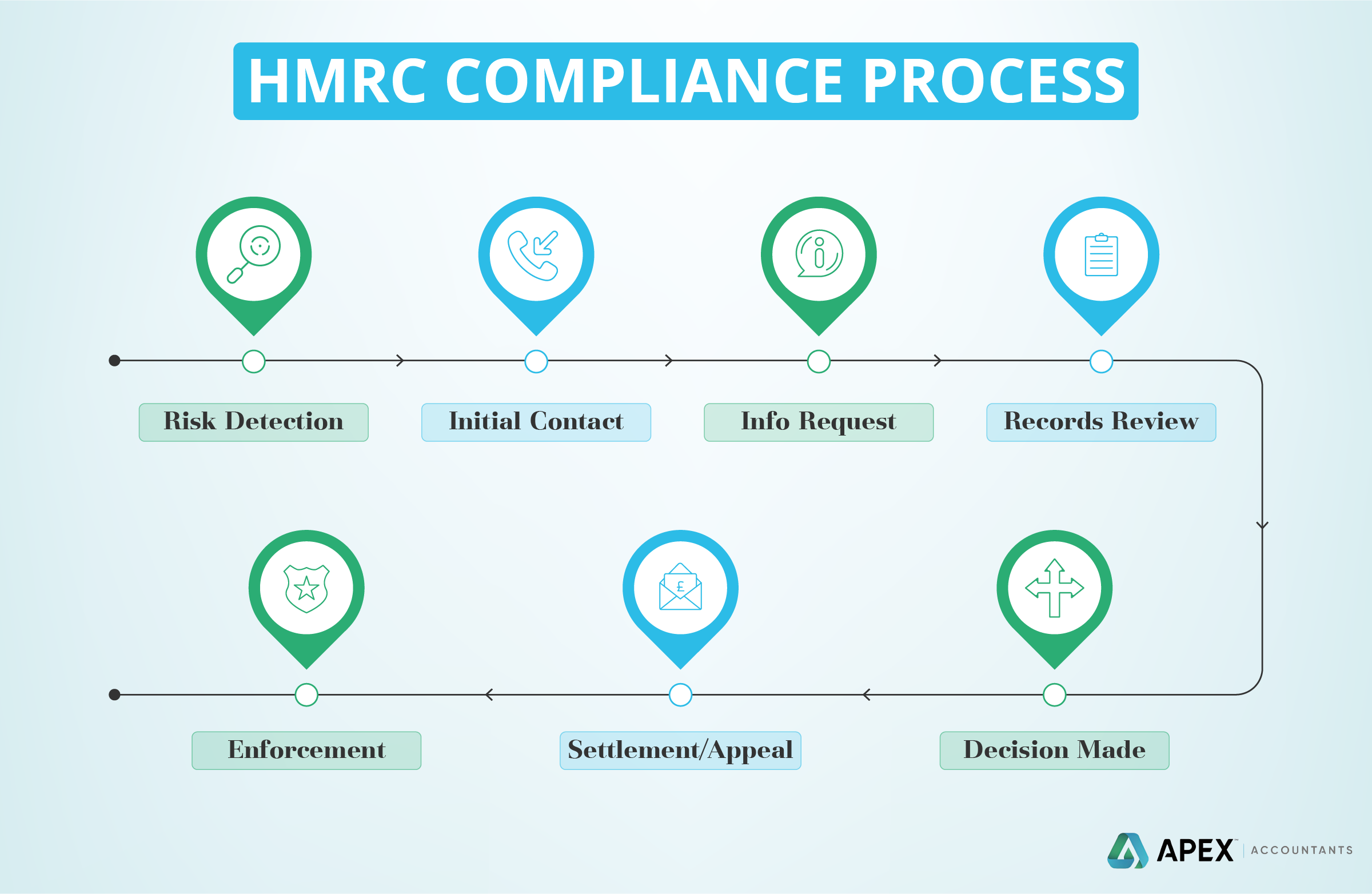
Visual representation of the HMRC Compliance Process, outlining key stages from risk detection to final decision-making, including steps such as initial contact, information requests, records review, enforcement, settlement/appeal, and decision-making.

Yes — and they’re substantial. The budget provides HMRC with extra funding, more powers, and a larger enforcement team. The measure includes 350 new criminal investigators focusing on small business fraud, particularly in cash-intensive sectors.

If your business operates under the Construction Industry Scheme (CIS), expect tighter checks around gross payment status and scheme abuse. New measures will close loopholes and apply harsher scrutiny across subcontractor payments.

For those affected by loan charge schemes or disguised remuneration, new legislation is coming to implement the latest review findings. HMRC will also offer a renewed settlement route for those who want to close out legacy liabilities.

There’s also a strong incentive for whistleblowing: individuals who provide useful information in tax fraud cases worth over £1.5 million can now receive up to 30% of the recovered amount.

To stay on the right side of these small business tax changes for 2025/2026, firms should review:

  • Historic contractor arrangements
  • Use of salary sacrifice or umbrella models
  • Subcontractor records under CIS
  • Digital bookkeeping and filing history

We strongly advise reviewing your compliance position early, before enforcement activity ramps up in 2026.

How is the budget expanding Making Tax Digital and digital compliance?

Digital tax reform continues apace, and businesses need to be ready.

From April 2026, Making Tax Digital (MTD) for income tax becomes mandatory for self-employed individuals and landlords with income over £50,000. However, in a welcome move, penalties for late quarterly submissions will not apply during the 2026–27 tax year.

From April 2027, a new penalty system will take effect for all Self Assessment taxpayers outside MTD — including stricter penalties for late filing and payment of income tax and VAT.

Looking ahead, the government will digitise more systems:

  • From 2027, real-time prompts will appear in VAT software to help prevent errors before submission
  • From 2028, similar features will be added to corporation tax software
  • From 2029, all VAT invoices must be issued in electronic format only

Agencies need to be aware of how the 2025 Budget affects small businesses relying on paper-based or spreadsheet-led systems. Migration to cloud-based software is no longer optional.

What other budget changes could affect small firms or their owners?

While much of the Autumn Budget 2025 focused on raising tax revenue, several long-term measures will impact business owners’ financial planning.

From April 2028, a pay-per-mile road tax will be introduced for electric and plug-in hybrid vehicles. This will sit alongside Vehicle Excise Duty and is intended to gradually replace revenue lost from declining fuel duty. Small firms operating EV fleets or offering electric vehicles via salary sacrifice schemes should factor in this future cost when planning long-term vehicle procurement.

For company directors using dividend-smoothing strategies, changes to ISA rules may restrict flexibility in shifting profits tax-efficiently. This could require updates to personal tax planning from April 2026 onwards.

What didn’t make it into the Budget that business owners were worried about?

Several feared measures were notably absent:

  • No exit tax on UK residents moving abroad
  • No change to the VAT registration threshold
  • No increase in Corporation Tax
  • No special levy on freelancers or side-hustlers
  • No extension of VAT to more digital services

These omissions offer some relief and breathing room — but many expect these topics to return in 2026, particularly if revenue falls short.

So what should small business owners do now?

The 2025 Budget may not contain any single knockout blow, but it clearly shifts the tax and compliance burden toward small businesses, landlords and directors.

Now is the time to:

  • Review your dividend and salary planning ahead of the 2026 rate changes
  • Reassess pension strategies in light of the 2029 salary sacrifice cap
  • Migrate to digital accounting systems before MTD penalties begin
  • Forecast wage cost increases from 2026 and model potential price adjustments
  • Check your eligibility for business rates reliefs and transitional caps
  • Evaluate CIS compliance and contractor arrangements
  • Adjust ISA and savings strategies before 2027

Supporting You Through Autumn Budget 2025 for UK Business Owners

We work with small business owners across every sector to prepare for tax changes, manage compliance, and protect cash flow.

Our team can help you:

  • Restructure how you take income and dividends
  • Prepare digital systems for MTD and invoicing changes
  • Forecast wage and payroll costs for 2026
  • Plan ahead for property income tax bands and landlord obligations
  • Support through HMRC audits, CIS checks or Loan Charge issues
  • Build multi-year budgets under frozen thresholds
  • Navigate real-time prompts and digital software updates

Speak to Apex Accountants today to get personalised advice that helps you stay compliant, confident and financially resilient — no matter what comes next.

HMRC Automatic Bank Deductions: What Beneficiaries Must Know Now

Many people across the UK now want clear answers about HMRC automatic bank deductions. The question has grown urgent due to rising debt levels, repayment mistakes and harsher enforcement measures. Recent headlines have added confusion, and many beneficiaries fear sudden deductions, frozen savings, or unexpected withdrawal notices.

HMRC has confirmed plans to restart a process that allows it to withdraw money from bank accounts in specific cases. The move has raised national worry because it affects taxpayers who ignore repeated contact and have outstanding tax debt of £1,000 or more. This has also triggered discussions around HMRC dipping into bank accounts, especially among people who rely on benefits or fixed incomes.

At Apex Accountants, we break down what’s happening, why HMRC is reinstating this power and what steps people should take now. We aim to give clear, practical guidance so beneficiaries understand their risks and stay fully protected.

Why has HMRC brought back this process now?

The UK continues to face higher living costs. Many households rely on credit to cover bills and essentials. Recent research shows that 14% of people affected by the cost-of-living crisis now use more borrowing than usual. Around 84% of adults held some form of loan in the year to May 2024. This increase in debt has pushed HMRC to take a firmer stance on long-standing arrears.

When people ignore repayment notices or appeals, HMRC considers stronger action. This phenomenon is why the Direct Recovery of Debts (DRD) process is returning. It allows HMRC to recover unpaid tax directly from bank accounts under controlled conditions, which has prompted more people to ask again, Can HMRC take money from my bank?

Can HMRC take money from my bank account?

Yes, but only when strict rules apply. UK taxpayers have been searching for clear answers on this point. DRD only applies to people who:

  • Owe £1,000 or more
  • Ignored repeated contact from HMRC
  • Have no active appeal or open dispute
  • Will still have £5,000 left in total across all accounts after the deduction

HMRC can deduct money from bank accounts, building society accounts and Cash ISAs. Banks must support the process and freeze the required amount when notified. This arrangement is the basis of what people commonly refer to as HMRC dipping into bank accounts, although the process involves multiple safeguards.

HMRC must issue a formal 30-day notice before any deduction, giving time to appeal or arrange payments.

How often does HMRC use direct recovery powers?

This is another common question. Despite headlines portraying the power as widespread, its use has been extremely rare. When DRD previously operated between 2016 and 2018, HMRC used the power only 19 times. HMRC says it targets people who can pay but refuse to engage.

Will HMRC take everything from my account?

No. HMRC must leave £5,000 untouched across all accounts. It cannot empty your savings, cannot freeze all funds, and cannot apply DRD if it would create serious financial hardship. Before DRD is even considered, HMRC must complete a face-to-face visit. This ensures identity checks, vulnerability assessments and discussions about alternative repayment options.

The aim is not to punish people in genuine difficulty but to recover debt from those who repeatedly ignore their obligations.

What if HMRC makes a mistake or someone impersonates me?

Recent cases show fraudsters have managed to redirect refunds by pretending to be taxpayers. This created incorrect debt letters and payment demands. Many people now search online for guidance on protecting their accounts.

Key facts:

  • HMRC will never ask for bank details through text messages.
  • Refund letters always arrive before any payment.
  • All genuine activity can be checked through the GOV.UK account.

If HMRC sends a refund to the wrong person due to fraud, it can correct your record and remove any incorrect debt once reported.

Are pensioners at risk of automatic deductions too?

Some headlines suggested HMRC would take up to £300 from pensioners’ accounts for Winter Fuel Payment changes. This caused confusion. The reality is different. Pensioners earning over £35,000 will need to repay part of the support, but HMRC will collect this through PAYE or self-assessment, not through bank deductions.

Monthly adjustments will be small for most. From 2027, HMRC will collect two years at once, but still through the tax system—not through accounts.

Who is most likely to face a DRD action?

You may be at risk if you:

  • Owe at least £1,000
  • Have ignored warning letters, calls or online messages
  • Let appeal deadlines pass
  • Have significant funds available
  • Declined all Time to Pay options

If someone genuinely cannot pay, HMRC will not use DRD. It will instead review circumstances and offer reasonable repayment plans.

How do I prevent HMRC from dipping into my account?

Avoiding communication is the biggest trigger for DRD. You can protect yourself by:

  • Checking your HMRC online account frequently
  • Updating your contact details
  • Responding to letters and notices
  • Requesting a Time to Pay arrangement early
  • Keeping proof of payments, appeals and correspondence
  • Seeking professional advice if you receive a notice

Acting early protects you from enforcement.

How Apex Accountants Supports You Through HMRC Automatic Bank Deductions

Many people reach out only when a warning letter arrives or when funds are already at risk, but early support makes a major difference. Apex Accountants guides clients through tax disputes, repayment negotiations and bank-deduction risks with a clear and practical approach that reduces stress and protects your money.

Our team deals with HMRC every day. We resolve repayment errors, challenge incorrect demands and remove penalties that come from misunderstandings or fraud. When HMRC contacts you about outstanding tax, we review the full situation, correct your record if needed and communicate directly with the department on your behalf.

We also help clients set up realistic Time to Pay agreements, which often prevent HMRC from considering direct recovery action altogether. If you receive a P800 letter, pension tax adjustment or any notice linked to benefits, we check the calculations and make sure repayments are accurate and sent to the right account. Our support protects you at every stage, especially when correspondence feels overwhelming or unclear.

If something does not look right, you feel pressured by a notice, or you are unsure whether HMRC has the correct information, we can step in immediately to protect your position and stop matters escalating.

For confidential guidance or urgent support with HMRC letters, deductions or repayment issues, contact Apex Accountants today and speak with a member of our team.

Book a Free Consultation