
Scam calls – HMRC

There has been sharp rise in the scam calls pretending from HMRC. In most of the cases the caller asks to disclose information about yourself or your finances.

Criminals now use every means at their disposal to obtain details that will enable them, ultimately, to cause you financial harm. For example, they might:

Pretend they are the tax office and offer you a tax refund or threaten you with legal action if you do not pay tax, you apparently owe.

Pretend you have inherited from a distant relative and all you need to do is send them certain personal details.

https://www.gov.uk/government/publications/phishing-and-bogus-emails-hm-revenue-and-customs-examples/phishing-emails-and-bogus-contact-hm-revenue-and-customs-examples

Call your mobile or landline using automated software and offer you some form of reward, financial penalty, or legal action unless you immediately select a number on your keypad.

With your personal details, name, address, etc., they can pretend they are you and borrow money in your name. With your bank details they can transfer money from your bank account.

Criminals can do this from the comfort of their homes, all they need is a computer. And so, be cautious when responding to any request for personal information or bank details. If in doubt, do not respond. Instead, contact a trusted adviser, call the tax office or your bank using contact details published on official websites.

If you need further information, feel free to contact us.
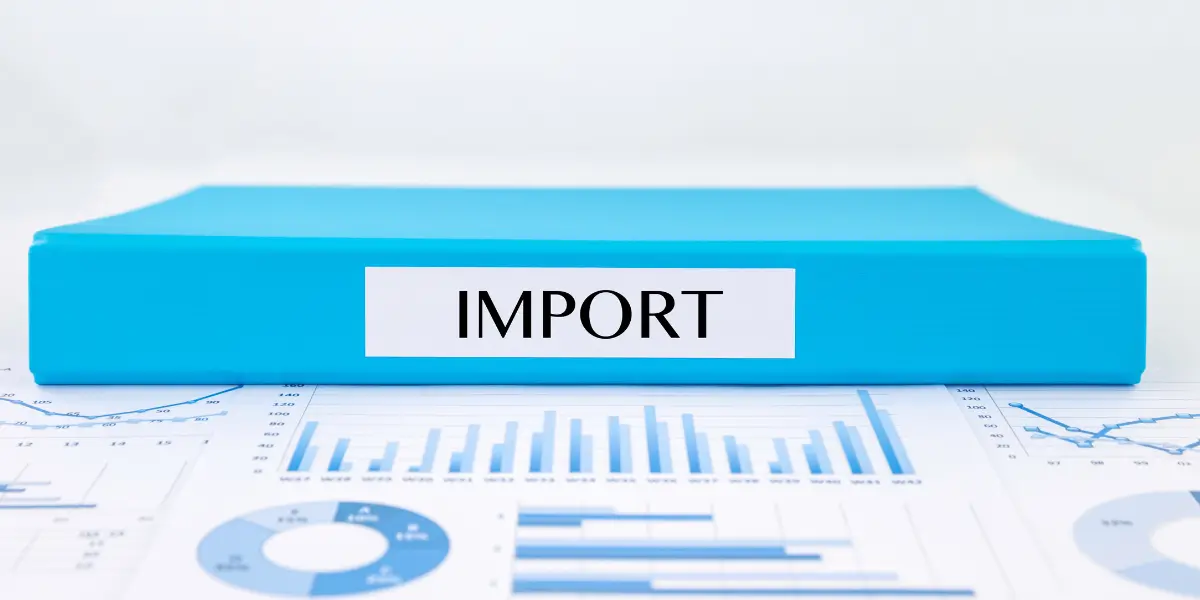
11 Steps to follow for Importing goods

There are special procedures for importing goods into the UK.

Following the end of the Brexit transition period, the process for importing goods from the EU effectively the same as is for all other international destinations.

Businesses, especially those that only trade with EU, should be aware of the rules and be working accordingly. Businesses can make customs declarations themselves or hire a third party such as a courier, freight forwarder or customs agent to do the paperwork.

Have a look at our VAT Services.

https://www.gov.uk/import-goods-into-uk

HMRC lists the following 11 steps that should be considered when importing goods:

  1. Check if you need to follow this process. The steps listed below apply if you are moving goods permanently to England, Wales or Scotland (Great Britain) from a country outside the UK or to Northern Ireland from a country outside the UK and the EU. There are different rules for goods that move between Great Britain and Northern Ireland or between Northern Ireland and the EU.
  2. Get your business ready to import. This includes ensuring you have an Economic Operator Registration and Identification (EORI) number. You also need to check that the business sending you the goods can export to the UK.
  3. Decide who will make custom declarations and transport the goods.
  4. Find out the commodity code for your goods.
  5. Find out if you can delay or reduce your duty payment.
  6. Check if you need a licence or certificate for your goods.
  7. Check the labelling, marking and marketing rules.
  8. Get your goods through customs.
  9. Claim a VAT refund.
  10. What to do if you paid the wrong amount of duty or rejected the goods
  11. Keep invoices and records.

If you are looking to know about VAT, feel free to contact us.

VAT on discounts and free gifts

VAT is chargeable on standard goods and services when these are offered by a registered VAT business.

The standard rate of VAT is 20% however there are different VAT rates and exemptions that available.  In the UK, there are three different VAT rates, the standard rate @ 20%, the reduced rate @ 5% and the zero rate @ 0%.

The VAT rules are even complex in various circumstances for example when there are discounts or free gifts which are quite normal these days.

Have a look at our VAT Services.

https://www.gov.uk/vat-businesses/discounts-and-free-gifts

We have summarised the main aspects of VAT treatment in various situations:

Discounts and free gifts

Situation                           VAT treatment
Discounts Charged on the discounted price (not the full price)
Gifts Charged on the gift’s full value. There are some specific exceptions on gifts given to the same person if their total value in a 12-month period is less than £50.
Multi-buys Charged on the combined price if all the items have the same VAT rate. If not, VAT is ‘apportioned’ as mixed-rate goods
Money-off coupons, vouchers etc No VAT due if given away free at time of a purchase. If paid, VAT due on the price charged
‘Face value’ vouchers that can be used for more than one type of good or service Face value’ vouchers that can be used for more than one type of good or service No VAT due, if sold at or below their monetary value
Redeemed face value vouchers Charged on the full value of the transaction
Redeemed face value vouchers sold at a discount Charged on the discounted value of the transaction
Link-save offers (buy one get one free or discounted) VAT is apportioned as mixed-rate goods – there are exceptions


If you are looking to know about VAT, feel free to contact us.


Extracting money out of limited company

The directors of limited company run business and like to extract money from their limited company in a tax efficient manner.

There are various ways money can usually be withdrawn.

For most directors, the optimum way to minimise personal tax liabilities will be using a combination of these methods.

  1. Salary, expenses and benefits
  2. Dividends
  3. Director’s loan

https://www.gov.uk/running-a-limited-company/taking-money-out-of-a-limited-company

Salary, expenses and benefits

Directors must ensure they are employed as an employee of their company and their salary is paid via PAYE. Most directors prefer to take a smaller salary and take a larger share of their pay in dividends. This is usually the most tax efficient method, but care needs to be taken based on individual circumstances.

Dividends

The tax-free dividend allowance is currently £2,000. The tax rate for dividends received in excess of the dividend tax allowance are taxed at: 7.5% for basic rate taxpayers, 32.5% for higher rate taxpayers, and 38.1% for additional rate taxpayers.

To pay a dividend, the company must:

  • hold a directors’ meeting to ‘declare’ the dividend
  • keep minutes of the meeting, even if there is only one director

Also, dividends can only be paid if there are sufficient retained profits to cover the payment.

Director’s loan

A director’s loan account is created when a director (or other close family members) ‘borrows’ money from their company. Many companies, particularly ‘close’ private companies, pay for personal expenses of directors using company funds.

Usually, when directors have overdrawn loan accounts, they do not have to pay tax, as long as the sum is repaid to the company within 9 months and one day of the account’s reference date.

However, the rules are further complicated if the loan is for more than £10,000 as interest must be charged. There are also further Income Tax costs if the loan is written off or ‘released’ (not repaid) by the company.


If you are looking to know, feel free to contact us.


Taxation of Crypto Assets For Individuals

Crypto currency or crypto is a digital asset designed to work as a medium of exchange.

There has been a surge in buying and holding different types cryptoassets (such as Bitcoin) as a personal investment, usually for capital appreciation in its value or to make purchases.

Cryptoassets are not considered as a currency or money by key the financial institutions of world. There are bright chances as Rishi Sunak suggested that UK might be the first country to link crytoassets to their currency.

The governments and taxation bodies around the world including HMRC are now actively looking forward to design taxation systems for cryptoassets. As per HMRC’s current suggested guidelines cryptoassets are treated similarly as shares.

The situation becomes interesting for those who are not UK tax resident; they are NOT generally exposed to UK tax. However, there are anti-avoidance rules in place for those who leave UK and come back to UK within 5 years.

There two taxation treatments available for dealing with cryptos:

  • Capital Gains Tax
  • Income Tax

Capital Gains Tax

For most of the taxpayers buying, holding and selling cryptocurrency will be deemed to carry on an investment activity and be subject to capital gains tax.

They will be liable to pay Capital Gains Tax when they dispose of their cryptoassets.

This includes:

  • selling tokens
  • exchanging tokens for a different type of cryptoasset
  • using tokens to pay for goods or services
  • giving away tokens to another person (unless it is a gift to your spouse or civil partner)

 Income Tax

The taxpayers who deal with cryptos (buying and selling, or receiving) as a business / trade will be deemed as carrying on trade of cryptos and will be subject to Income Tax. HMRC uses the concept of badges of trade when considering the profit motive.

It is worth mentioning here the rates of Income tax are higher than Capital gains tax.


Most of the holders of cryptos would be the ‘day-trader’ who is actively buying and selling cryptoassets with the view to realising a short-term profit.

Even in these circumstances, it is generally difficult to fall within the description of a ‘trader’ and HMRC generally accept that individuals will be subject to the more favourable rates of capital gains tax. If the taxpayer’s activity is trading, then Income Tax will take priority over CGT and will apply to profits (or losses).

HMRC has published further information for businesses and companies about the tax treatment of cryptoasset transactions.

Individuals will be liable to pay Income Tax and National Insurance Contributions on cryptoassets which they receive from:

  • their employer as a form of non-cash payment
  • mining, transaction confirmation or airdrops

There may also be cases where an individual is running a business which is carrying on a financial trade in cryptoassets and will therefore have taxable trading profits.


If you need any further information, feel free to contact us.

Residence And Domicile for tax purposes

HMRC’s online guidance note for residence, domicile and the remittance basis: RDR1 is intended for UK residents and non-residents and covers the residence, domicile and remittance basis rules from 6 April 2013 and onwards.

For most taxpayers, it will be clear whether they are resident in the UK. However, for taxpayers with complex circumstances the statutory resident test (SRT) will help provide more clarity as to their residency status in the UK. The UK residents are usually taxed on the arising basis of taxation. This means that all their worldwide income and gains will be taxable in the UK.

Under new rules that came into effect from 6 April 2017, any person who has been resident in the UK for more than 15 of the previous 20 years are deemed to be domiciled in the UK for tax purposes. In addition, individuals who were born in the UK, to UK domiciled parents, are no longer able to claim non-domiciled status whilst they are resident in the UK.

Non-doms that remain unaffected by these changes and wish to retain access to the remittance basis of taxation must pay an additional sum in addition to the tax on any income or gains remitted. This sum is known as the Remittance Basis Charge (RBC). The RBC charge for individuals who have been UK resident for at least 7 of the last 9 years is £30,000. The charge for individuals who have been resident in the UK for at least 12 of the last 14 years is £60,000.

Have a look at our estate planning services.

In many cases, relief is given in the UK for the foreign tax paid on foreign income and gains under Double Taxation Agreements or via unilateral relief.

If you need any further information, feel free to contact us.

Debt Respite Scheme Support

The Government announced a Debt respite scheme launched, aptly named Breathing Space.

Breathing Space will give those facing financial difficulties space to receive debt advice, or mental health crisis treatment, without pressure from creditors or mounting debts.

There are two types of breathing space: a standard breathing space and a mental health crisis breathing space. Where there is a difference between them, we’ll refer specifically to either a standard breathing space or a mental health crisis breathing space. Where there is no difference, we will simply refer to breathing space.

Under the scheme, people will be given legal protection from their creditors for 60 days, with the most interest and penalty charges frozen, and enforcement action halted. They will also receive professional debt advice to design a plan which helps to get their finances back on track.

And recognizing the link between problem debt and mental health issues, these protections will be available for people in mental health crisis treatment – for the full duration of their crisis treatment plus another 30 days.

People across England and Wales who are struggling to repay their debts could be eligible, and the Government expects 700,000 people to benefit in the first year of the scheme.

Most debts will qualify for this debt respite scheme including credit and store cards; personal and payday loans; overdrafts; utility bills, rent and mortgage arrears; and government debts like tax and benefits.

If you need any further information, feel free to contact us.

Book a Free Consultation