

Why You Need A CFO For Mergers & Acquisitions in Food Processing Sector in UK

Consolidation in the UK food processing sector is accelerating. In 2026, more than ever, firms will seek scale, resilience, and synergies. For CFOs in target or acquirer firms, mastering due diligence is critical. At Apex Accountants, we emphasise on keeping a sharp financial lens with every deal. Below, we present key financial considerations and essential due diligence for mergers and acquisitions in the food processing sector.

Mergers & Acquisitions in Food Processing Sector?

Several forces drive consolidation in UK food processing:

  • Cost pressures and inflation: Rising costs for ingredients, packaging, energy and transportation squeeze margins. Companies seek economies of scale.
  • Supply chain resilience: Vertical integration, or absorbing suppliers, helps control input risk and reduce dependency.
  • Private equity and trade interest: PE firms are active in food & beverage, pushing bolt-on acquisitions.
  • Consumer trends & niche growth: Growth in plant-based foods, premium ingredients, and “better for you” products is attracting deals in those sub-segments.
  • Site consolidation: Merging operations or closing underperforming sites drives lower fixed costs per unit.
  • Regulatory and sustainability impetus: Firms aim to absorb compliance costs and invest in greener production across a larger base.

CFO’s Due Diligence Essentials 

When evaluating a potential acquisition in the UK food processing sector, our Virtual CFOs at Apex Accountants take a hands-on, analytical, and commercially focused approach. Each stage of due diligence is driven by financial clarity, operational insight, and risk anticipation.

1. Quality of Earnings & Adjusted EBITDA

Our virtual CFOs dissect revenue streams to isolate sustainable earnings from one-off gains. They assess how commodity price swings, seasonal fluctuations, and supplier terms affect profitability. Every figure is validated against operational realities to present a clear earnings baseline for valuation.

2. Net Working Capital & Inventory Risk

Our M&A advisory for food processing businesses includes a comprehensive review of stock turnover, shelf-life exposure, and procurement cycles to measure liquidity and efficiency. By analysing historical patterns, our virtual CFOs identify excess stock, wastage trends, and cash flow gaps — helping acquirers structure deals with precise working capital adjustments.

3. Capital Expenditure & Machinery Condition

Our due diligence teams conduct plant and equipment assessments to highlight underinvestment, deferred maintenance, and replacement needs. Our analysis converts technical depreciation data into real-world capital forecasting — ensuring future cash flow implications are transparent.

4. Regulatory, Food Safety and Compliance Liabilities

Food safety compliance defines reputational and financial risk. Our CFOs coordinate with technical consultants to evaluate FSQA reports, hygiene audits, and environmental compliance. Any red flag is quantified in financial terms to shape negotiation strategy.

5. Supply Contracts & Raw Material Exposure

Our reviews of supplier and customer contracts identify pricing dependencies and concentration risk. We stress test supply scenarios, evaluate hedging policies, and model exposure to raw material volatility — helping clients protect gross margins post-acquisition.

6. Synergies & Cost Savings

Our virtual CFO services for food processing plants include preparation of synergy models rooted in operational logic. We quantify achievable savings in logistics, procurement, and overheads, then design integration dashboards that track these metrics against time and budget.

7. Tax, Transfer Pricing & Duty Exposure

Our tax specialists examine past compliance, reliefs, and Brexit-related tariffs. Every cross-border transaction, VAT position, and customs process is reviewed. The goal is to eliminate hidden duty exposure and identify recoverable tax benefits before completion.

8. Cash Flow Forecasting & Stress Testing

We model different integration scenarios—best, base, and downside—using real cost inputs and realistic assumptions. Each model helps investors anticipate short-term liquidity needs and long-term returns, keeping the acquisition financially resilient.

9. Soft Due Diligence & Cultural Fit

At Apex Accountants, our virtual CFOs also evaluate leadership alignment, staff retention, and safety culture. These qualitative insights reveal potential friction that numbers alone cannot capture, ensuring smooth integration after acquisition.

10. Post-Merger Integration & Exit Metrics

From day one, we help clients design post-acquisition scorecards to track cost synergies, EBITDA growth, and working capital. Our virtual CFO services for food processing plants continue beyond the deal, managing performance reviews and preparing exit readiness plans aligned with investor expectations.

Conclusion

In the UK food processing sector, consolidation is no longer optional for many players aiming to remain competitive. But success hinges on rigorous due diligence. CFOs must lead this process, ensuring that earnings are real, liabilities are uncovered, integration is feasible and synergies are credible.

At Apex Accountants, our M&A advisory for food processing businesses guides clients through every step: from financial modelling to tax review and risk stress testing to post-deal integration. If you are exploring a merger or acquisition in UK food processing, we are ready to support your due diligence with precision and insight.
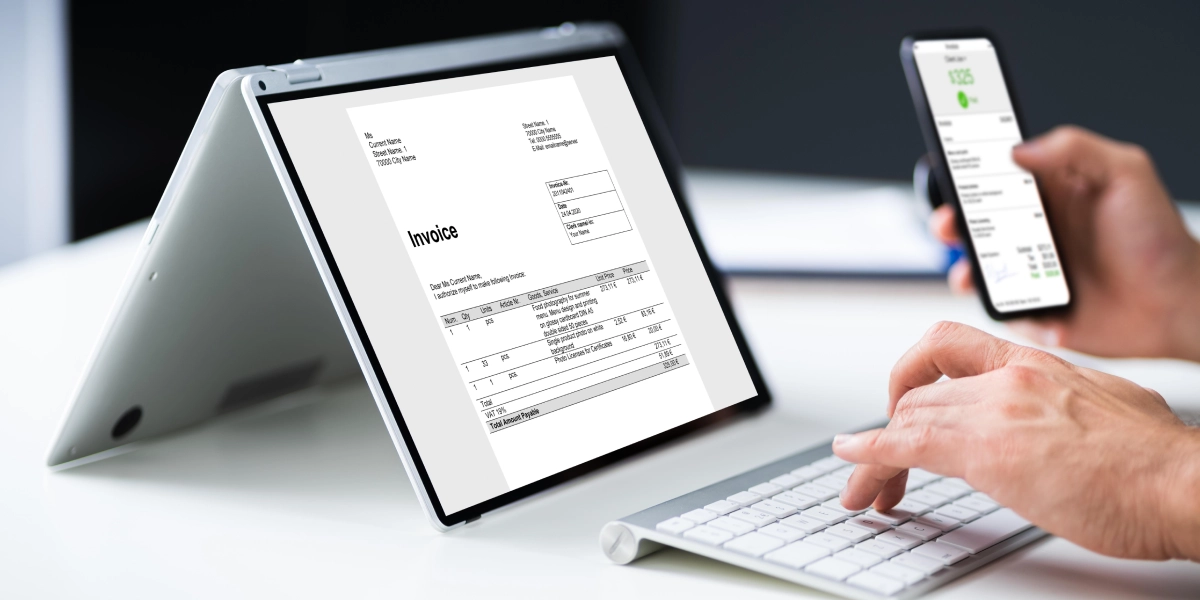

Digital Receipts and Automated Expense Management for Food Processing Businesses 

In the food processing sector, operational efficiency is key. At Apex Accountants, we believe that adopting digital receipts and cloud-based automated expense management for food processing businesses transforms finance workflows while keeping you fully compliant with HMRC’s digital record-keeping rules in the UK.

The Shift From Paper To Digital Receipts For Food Processing Plants

Traditional paper receipts in a food processing plant are vulnerable. They fade, get lost, or require manual filing. Digital receipts for food processing plants, by contrast, can be captured via smartphone, scanned at point of sale, or issued by suppliers in digital form. These digital records are timestamped, legible, and stored securely in the cloud.

For food processors dealing with many suppliers, transport costs, maintenance costs, and staff expenses, digital receipts drastically reduce admin. Your staff simply photograph or upload receipts; the cloud system extracts key data automatically (e.g., supplier, date, amount). This removes manual entry and human errors.

Automated Expense Management for Food Processing Businesses 

Once receipts are digital, the next step is automation. Modern cloud accounting software for food processing plants integrates with expense-management modules. Those modules:

  • auto-match receipts with expense claims,
  • flag anomalies or policy breaches,
  • route approvals to managers,
  • and post entries into your account’s ledger.

In a food processing plant, where costs like packaging, cleaning chemicals, equipment repairs, and fuel are frequent, automation gives real-time visibility into spending. Finance teams can track cost trends, spot overspending, and enforce policy compliance across multiple sites.

Compliance with HMRC digital mandates

In the UK, Making Tax Digital (MTD) is central to HMRC’s digital record-keeping regime. For VAT-registered businesses, digital record-keeping and electronic submission of VAT returns via MTD-compatible software have been mandatory since April 2022. 

Beyond VAT, from April 2026, many sole traders and landlords must also maintain digital records under MTD for income tax. The Income Tax (Digital Requirements) Regulations require the use of functional software to keep and preserve digital records. 

For food processing companies structured as limited companies, MTD for Income Tax does not yet apply—but VAT digital rules are already binding.

Additionally, HMRC’s guidance states that records held electronically must be “instantly available” and accessible upon request.  You must also keep VAT and business records for at least 6 years (for VAT) and retain general business records per HMRC’s record-keeping rules. 

So, cloud accounting that ties digital receipts directly into your bookkeeping helps you meet these obligations—with audit trails, versioning, and secure backups built in.

Benefits of Automation for UK food processing plants

Operational efficiency

Less paper means fewer administrative delays. Field teams and plant managers can submit costs immediately. Finance can process claims more quickly.

Data accuracy and control

Automation minimises manual errors. You can set spending limits, detect duplicate claims or out-of-policy expenses, and enforce cost control across sites.

Audit readiness

When HMRC asks for supporting documents, your digital records are instantly retrievable. The system maintains safe logs, timestamps, and chain of custody.

Cost insights & reporting

You can run dashboards by department, cost centre, or product line. For example, compare consumable costs per batch or energy costs per unit output.

Scalability & collaboration

Cloud systems support multiple locations, multiple users, and role-based access. You can collaborate with your accountant from anywhere.

Implementation Steps – Apex Accountants’ Expert Guidance

At Apex Accountants, we help food processing plants move confidently towards a fully digital, compliant, and efficient expense management system. Our proven approach focuses on practicality, accuracy, and compliance at every stage.

1. Select MTD-Compatible Software: 

Choose Making Tax Digital (MTD)-compatible cloud accounting software for food processing plants that includes automated expense capture and integrates seamlessly with your existing systems.

2. Adopt Mobile Receipt Capture Tools: 

Equip your staff and suppliers with mobile receipt capture apps. Receipts can be photographed or uploaded instantly, reducing paper clutter and improving record accuracy.

3. Establish Clear Expense Policies: 

Define spending categories, limits, and approval workflows. This maintains consistency across multiple production sites and prevents out-of-policy claims.

4. Provide Staff Training: 

Educate employees on how to capture and submit digital receipts correctly. Proper training ensures smooth adoption and full HMRC compliance.

5. Monitor and Review Regularly: 

Conduct periodic reviews of system reports and flagged exceptions. This helps detect irregularities early and strengthens financial control.

6. Protect and Preserve Data: 

Back up all records securely. Maintain audit logs, enforce access controls, and protect your financial data with robust encryption protocols.

By adopting digital receipts and automated expense management, UK food processing operations can remove paper-based inefficiencies and achieve total compliance with HMRC’s digital record-keeping requirements. At Apex Accountants, we specialise in helping food processing plants modernise their financial systems, strengthen control, and maintain full audit readiness. Book a free consultation today to discuss how we can implement a digital expense management solution tailored to your operations.

Corporation Tax Strategies For Food Processing Businesses and Post-Brexit Trade Deal Updates

In the wake of the updated 2026 “reset” agreement between the UK and the EU, food processors must re-examine their corporation tax strategies. Apex Accountants provides tax, trade and restructuring advice tailored to food processing plants. In this article, we explain the latest corporation tax implications, a worked case study, and how Apex Accountants’ corporation tax strategies for food processing businesses can assist you.

What Is the 2026 UK-EU “Reset” Agreement?

The 2026 “reset” deal revises post-Brexit trade terms to make goods movement smoother between the UK and EU. It focuses on food and agriculture, introducing partial alignment on Sanitary and Phytosanitary (SPS) rules to reduce border checks and paperwork. The agreement also links both sides’ carbon and emissions systems to avoid double taxation under carbon border rules.

How It Affects Food Processors

  • Simpler exports – Fewer certificates and inspections reduce transport delays and costs for meat, dairy, and plant-based goods.
  • Rules of origin – Firms must keep strong documentation to maintain zero-tariff access.
  • Carbon reporting – Linked emission schemes mean processors must track and report embedded carbon in packaging and ingredients.
  • Profit planning – Lower compliance costs improve margins, giving room for reinvestment and better corporation tax planning.

Key Trade & Regulatory Shifts Affecting Tax Position

  • The new trade agreement aims to align Sanitary and Phytosanitary (SPS) regimes, reducing routine border checks between Great Britain and the EU.
  • Under rules of origin, goods exported to the EU may qualify for zero tariffs if sufficient local content is demonstrated.
  • The EU’s Carbon Border Adjustment Mechanism (CBAM) becomes fully active from January 2026; the UK is expected to roll out its linked scheme by 2027.
  • Removal of health, plant, and organic certificates for compliant goods is anticipated, cutting compliance cost and delays.
  • These changes cut friction, reduce indirect costs, and improve predictability, thereby affecting margin and tax planning decisions.

These treaty and regulatory shifts feed directly into the tax strategy for food processors.

Corporation Tax Implications & Opportunities

Enhanced Capital Allowances & Investment Reliefs

With smoother access to EU markets, firms can plan for plant upgrades. Fully utilise the annual investment allowance (AIA), first-year allowances, and special plant and machinery reliefs to accelerate tax deductions.

Transfer Pricing & Intra-Group Sales

As trade friction lessens, intra-group sales to EU affiliates will face less export stigma—but transfer pricing must still follow arm’s length rules. Proper documentation and benchmarking remain crucial.

Tariff Savings & Margin Leverage

Qualifying for zero-tariff treatments frees up margin and cash. That additional headroom can fund further capital investment or reduce borrowing, effectively lowering the taxed base.

CBAM, Emissions Reporting & Compliance Costs

Materials and inputs with embedded carbon may incur CBAM-related costs. Food processors should map emissions, anticipate reporting obligations, and factor these into costing models to avoid surprises reducing profit.

R&D and Green Incentives

Innovation around low-carbon packaging or waste reduction projects may attract R&D tax credits or green investment allowances, further reducing your corporation tax liability.

Patent / IP Reliefs

If your business develops novel food processes or packaging innovations, the Patent Box or equivalent IP incentives may apply, taxing qualifying profits at a lower effective rate.

Case Study: A UK Food Processor Adapts to the 2026 Agreement

A Midlands-based food processing plant sought Apex Accountants’ advice after facing rising costs from EU-bound exports and uncertainty over carbon pricing. Following our review, the plant implemented a new capital investment plan for energy-efficient refrigeration units worth £1.2 million.

By claiming Annual Investment Allowance (AIA) and leveraging R&D tax relief for process innovation, the plant reduced its corporation tax liability by £178,000 in one year. We also restructured intra-group pricing with their EU distributor, aligning it with the updated Sanitary and Phytosanitary (SPS) and rules-of-origin framework.

This combination of trade-compliant documentation, capital allowances, and sustainability incentives allowed the business to stabilise margins and improve profitability despite changing border rules.

How Apex Accountants’ Corporation Tax Strategies For Food Processing Businesses Can Help

At Apex Accountants, our corporation tax services for food processing plants bridge tax, trade, and operational strategies to deliver practical, sector-focused solutions. We help our clients:

  • Evaluate the impact of new trade agreements on their supply chains and profit margins
  • Model multiple tax scenarios (pre-deal/post-deal) to optimise tax planning
  • Structure capital investment strategies and help claim allowances or reliefs such as Annual Investment Allowance (AIA) and R&D tax credits
  • Prepare transfer pricing documentation aligned with updated Sanitary and Phytosanitary (SPS) and rules-of-origin frameworks
  • Map emissions and advise on carbon pricing, green incentives, and intellectual property (IP) reliefs
  • Monitor ongoing compliance changes and guard against potential HMRC adjustments or investigations

Our corporation tax services for food processing plants provide comprehensive, in-house support across all tax, trade, sustainability, and strategic planning needs.

Conclusion & Free Consultation Offer

As the new UK-EU reset becomes effective in 2026, food processors have both opportunity and complexity ahead. Tightly coordinated tax strategy for food processors is no longer optional — it is essential. Apex Accountants invites you to book a free consultation. We will review your trade flows, capital plans, and tax positions and propose a practical optimisation strategy. Contact us today, and let’s make sure you capitalise on the reset agreement with confidence and compliance.

Book a Free Consultation