
-
CALL US 0203 883 4777
Current Capital Gains Tax rates

Capital Gains Tax is a tax on the profit when you sell (or ‘dispose of’) something (an ‘asset’) that’s increased in value.
Capital Gains Tax (CGT) is normally charged at a flat rate of 20% and this applies to most chargeable gains made by individuals. If taxpayers only pay basic rate tax and make a small capital gain, they may only be subject to a reduced rate of 10%. Once the total of taxable income and gains exceed the higher rate threshold, the excess will be subject to 20% CGT.
A higher rate of CGT applies to gains on the disposal of residential property (apart from a principal private residence). The rates are 18% for basic rate taxpayers and 28% for higher rate taxpayers. Again, if the gain pushes a taxpayer into the higher rate, then CGT will be payable at both rates.
The usual due date for paying any CGT owed to HMRC is the 31 January following the end of the tax year in which the capital gain was made. However, since April 2020, any CGT due on the sale of a residential property needs to be paid within 30 days. In practice, this change only applies to the sale of residential property that does not qualify for Private Residence Relief (PRR).
There is also an annual CGT exemption for individuals that is currently £12,300. A husband and wife each have a separate exemption. Same-sex couples who acquire a legal status as civil partners are treated in the same way as married couples for CGT purposes.
If you are looking to know more Capital gains tax (CGT), please contact us.
Recent Posts

HMRC Auto-Registration for MTD: What Happens If You Don’t Sign Up First
Sole traders and landlords are increasingly asking what happens if they do not respond to Making Tax Digital sign-up letters....
A Complete Guide to UK Airbnb Tax: Rules, Reliefs and Rates for 2026/27
A host can receive regular Airbnb bookings and still be unsure whether HMRC sees the income as a small side...
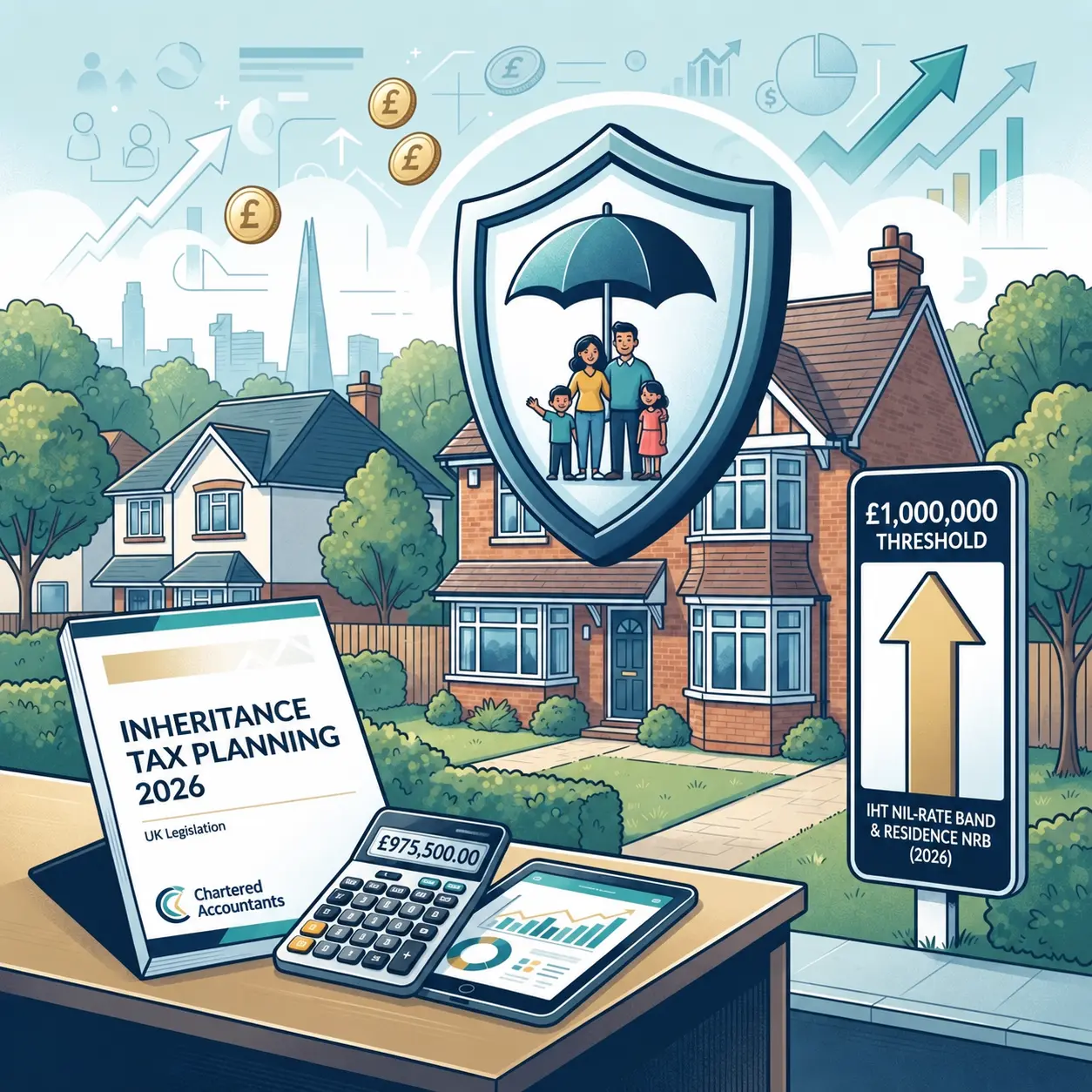
Inheritance Tax Planning: A Practical UK Guide for 2026
A couple in their late sixties own a home worth £750,000 and have £700,000 in savings and investments. Their combined...

Accountant for Community Pharmacy UK: VAT and Tax Guide
A pharmacy can look profitable on paper while still facing tight cash flow. NHS income, retail sales, dispensing margins, staff...

HMRC’s First Cryptoasset Statistics Show Why Records Matter
Capital Gains Tax is becoming increasingly important for UK crypto investors as HMRC gains access to more detailed information about...

Making Tax Digital for Income Tax 2026: What to Do Now
A sole trader may have completed the first MTD quarterly update without realising that the next deadline is already approaching....

MTD for Income Tax: What Sole Traders and Landlords Should Do After the First Deadline
A client came to Apex Accountants last week, a sole trader with two income streams, unsure whether she had met...

HMRC’s 436,000 MTD Milestone: What Sole Traders and Landlords Should Do Before September
We are increasingly asked the same question by clients who have heard about Making Tax Digital but are not sure...
HMRC Late Payment Interest Rate: What 7.75% Costs You
Miss a tax deadline today and HMRC charges 7.75% a year on the outstanding balance. The Bank of England’s base...

Electricity VAT Cut 2026: What the Six-Month Zero Rate Means from 1 October
The government’s announcement, made in July by new Prime Minister Andy Burnham as one of his first acts in office,...