
-
CALL US 0203 883 4777
Tax Liabilities From Cryptoassets Explained for UK Investors and Traders
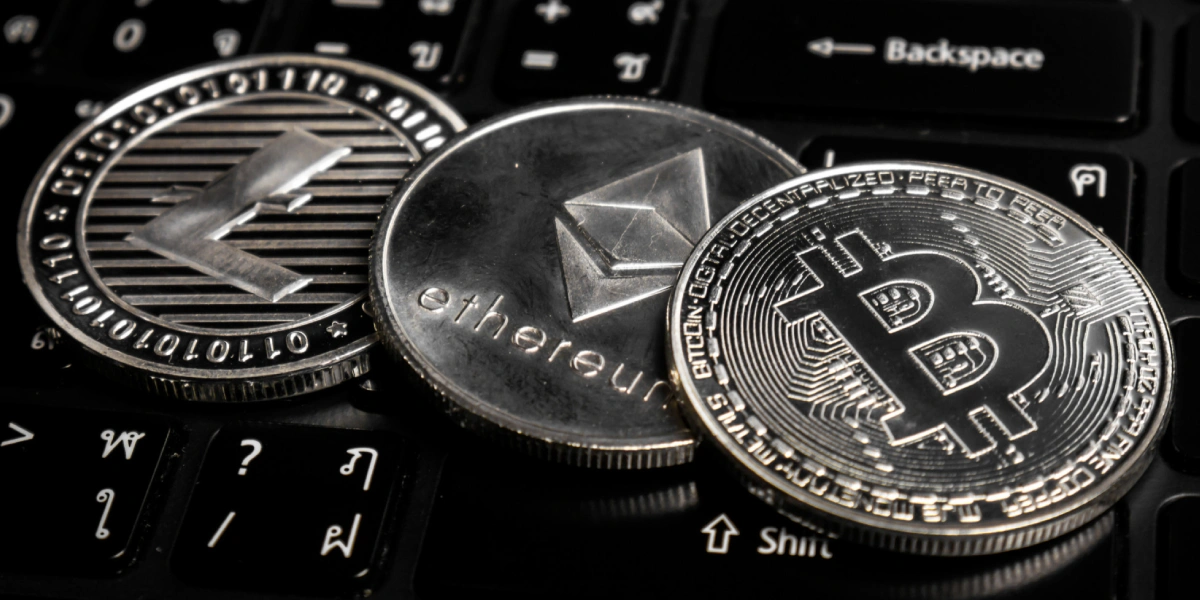
We are increasingly approached by people who have traded between tokens for several years but never withdrawn money to a UK bank account. Many assume that no tax arises until cryptocurrency is converted into pounds. That is not how the UK rules work.
HMRC has confirmed that it may contact people who have traded cryptoassets by letter, email or text message. The contact may ask them to check whether their crypto income and gains have been declared correctly. This makes it important to review potential tax liabilities from cryptoassets before replying or submitting another tax return.
Quick Answer
- Buying and continuing to hold cryptoassets does not normally create an immediate tax charge.
- Selling, exchanging, spending or giving away tokens can be a disposal for Capital Gains Tax.
- Crypto received through employment, mining, staking or lending may be subject to Income Tax.
- The Capital Gains Tax annual exempt amount is £3,000 for 2026/27.
- Cryptoasset service providers have collected customer tax details under the Cryptoasset Reporting Framework since 1 January 2026.
- Undeclared liabilities can sometimes be corrected through self-assessment or HMRC’s Cryptoasset Disclosure Service.
What Are Cryptoassets for UK Tax Purposes?
Cryptoassets are digital representations of value whose transactions are secured and validated using distributed ledger technology or similar cryptographic systems. They include exchange tokens such as bitcoin, utility tokens, security tokens, stablecoins and non-fungible tokens.
HMRC does not generally treat cryptoassets as money or currency. Their tax treatment depends on the nature of the asset, how it was acquired and what the owner did with it. A token received as payment for work can therefore have a different treatment from the same token bought as an investment.
This distinction is central to Cryptoassets and tax because a transaction may fall under:
- Capital Gains Tax
- Income Tax
- National Insurance contributions
- Corporation Tax
- Inheritance Tax
- VAT, where a business supplies taxable goods or services in return for cryptoassets
For most individuals buying tokens as investments, HMRC expects gains and losses to fall within the Capital Gains Tax rules rather than being treated as trading profits. The position may differ where the frequency, organisation, commercial purpose and overall circumstances amount to a financial trade.

Why Is HMRC Reviewing Tax Liabilities From Cryptoassets?
HMRC is reviewing crypto activity because exchange and service-provider information can be compared with tax returns and other taxpayer records. Its official guidance confirms that people who traded cryptoassets may receive letters, emails or text messages asking them to check and report crypto income or gains.
Receiving a letter does not automatically mean HMRC has opened a formal investigation or decided that tax is due. It does mean the taxpayer should carry out a proper reconciliation rather than reply from memory.
A review should include:
- Centralised exchange accounts
- Self-custody wallets
- Decentralised exchanges
- Staking and lending platforms
- Airdrops and token rewards
- Purchases made using tokens
- Transfers between personally controlled wallets
- Transactions on overseas platforms
- Previous disposals and reported capital losses
One common mistake is to review only cash withdrawals. A taxable disposal may have occurred even where the proceeds remained within the crypto ecosystem.
Which Crypto Transactions Trigger Capital Gains Tax?
Capital gains tax can arise when an individual sells, exchanges, spends or gives away cryptoassets. The tax is charged on the gain, not the total amount received.
HMRC treats the following transactions as disposals:
| Crypto Activity | Usual UK Tax Treatment | Practical Point |
| Buying and holding tokens | No immediate disposal | Tax is normally considered when the tokens are later disposed of. |
| Selling tokens for pounds | Capital disposal | Calculate the difference between disposal proceeds and allowable cost. |
| Exchanging one token for another | Capital disposal | The sterling market value of the token received is used. |
| Using tokens to buy goods or services | Capital disposal | Tax may arise even though no cash is received. |
| Gifting tokens to another person | Usually a market-value disposal | Transfers to a spouse or civil partner normally follow different rules. |
| Moving tokens between wallets under the same ownership | Normally no disposal | Evidence of beneficial ownership should be retained. |
| Donating tokens to charity | Usually no Capital Gains Tax | Exceptions can apply to tainted donations or sales above acquisition cost. |
HMRC specifically confirms that exchanging one type of token for another is a disposal. Moving the same tokens between wallets that remain under the same beneficial ownership is not normally a disposal.
The gain is broadly calculated as:
Sterling disposal value minus allowable acquisition cost and allowable transaction costs
Allowable costs may include acquisition expenditure, transaction fees, certain valuation costs and the appropriate share of a pooled acquisition cost. Costs already deducted for Income Tax cannot normally be deducted again.
When Does Receiving Crypto Create an Income Tax Liability?
Crypto received from employment, mining, staking or lending can create an Income Tax liability at the point of receipt. Its sterling value at that time is normally used to calculate the taxable amount.
| How Crypto Is Received | Usual Tax Treatment |
| Employment remuneration | Employment income, potentially subject to PAYE and National Insurance |
| Mining carried on as a trade. | Trading income |
| Occasional mining outside a trade | Miscellaneous income |
| Staking rewards outside a trade | Miscellaneous income |
| Lending or DeFi returns | Usually miscellaneous income where no trade exists |
| Airdrop received for performing a service | Trading or miscellaneous income |
| Unsolicited personal airdrop with no service or condition | May fall outside Income Tax, although a later disposal can create a capital gain |
HMRC allows up to £1,000 of combined trading and miscellaneous income each tax year through the trading and miscellaneous income allowance. Crypto income counts towards the same allowance as other relevant income sources. Where total miscellaneous income is between £1,000 and £2,500, HMRC says the individual should contact it. Where it exceeds £2,500, self-assessment registration may be required.
An airdrop does not automatically create Income Tax. HMRC says Income Tax may not apply where tokens are received without the recipient providing a service, meeting conditions or carrying on a related trade. A later sale or exchange can still produce a chargeable gain.
Where income tax has already been charged on tokens, the value taxed as income generally becomes part of their acquisition cost. Capital gains tax is then considered only on the subsequent increase or decrease in value.
How Much Tax on Cryptoassets Could You Pay in 2026/27?
For 2026/27, individuals have a capital gains tax annual exempt amount of £3,000. Gains falling within the unused basic-rate band are generally taxed at 18%, while gains above that band are generally taxed at 24%.
| 2026/27 Measure | Amount or Rate |
| Capital Gains Tax annual exempt amount | £3,000 |
| Capital Gains Tax rate within the available basic-rate band | 18% |
| Capital Gains Tax rate above the basic-rate band | 24% |
| Basic-rate band used in the CGT calculation | £37,700 |
| Trading and miscellaneous income allowance | Up to £1,000 |
Income from employment, staking, mining or lending is taxed under the relevant Income Tax rules rather than the Capital Gains Tax rates. The precise rate depends on the taxpayer’s total income, residence and circumstances. Scottish Income Tax bands differ for certain types of non-savings, non-dividend income.
Worked Crypto Capital Gains Tax Example
Suppose an individual has taxable income of £30,000 and makes total net crypto gains of £15,000 during 2026/27.
- Deduct the £3,000 annual exempt amount.
- The taxable gain is £12,000.
- The remaining basic-rate band is £37,700 minus £30,000, which equals £7,700.
- £7,700 is taxed at 18%, producing £1,386.
- The remaining £4,300 is taxed at 24%, producing £1,032.
- The total Capital Gains Tax is £2,418.
This assumes there are no other gains, losses or reliefs affecting the calculation.
A separate reporting rule can apply even where the gain is below £3,000. An individual already registered for self-assessment must report capital disposals if the total proceeds from relevant assets exceed £50,000 for 2023/24 onwards.
How Are Crypto Gains Calculated Under HMRC Pooling Rules?
Fungible tokens of the same type are normally grouped into a separate Section 104 pool. Instead of identifying the precise bitcoin or ether sold, the taxpayer maintains a running quantity and pooled allowable cost.
Each token type requires its own pool. Bitcoin, ether and another token would therefore have three separate calculations.
Disposals are matched in this order:
- Tokens acquired on the same day as the disposal
- Tokens of the same type acquired within the following 30 days
- Tokens held in the Section 104 pool
The 30-day rule can affect people who sell tokens and buy the same type back shortly afterwards. It may prevent the new purchase cost from immediately entering the general pool and instead match it against the earlier disposal.
NFTs are normally separately identifiable. HMRC therefore states that they are not pooled in the same way as interchangeable tokens.
Pooling is one reason exchange-generated gain reports should not be accepted without checking them. A platform may not know what the user holds elsewhere, whether tokens were transferred between personal wallets or whether a same-day or 30-day acquisition occurred on another exchange.
What Records Does HMRC Expect Crypto Investors to Keep?
Taxpayers must keep records showing how each taxable figure was calculated. An exchange statement alone is rarely sufficient where several platforms or private wallets have been used.
Records should include:
- The type and quantity of tokens
- Acquisition and disposal dates
- Sterling values at the time of each transaction
- Transaction identifiers
- Wallet addresses
- Exchange statements
- Bank statements
- Fees and other allowable costs
- Tokens remaining after each disposal
- Pooled costs before and after each transaction
- Evidence that wallet-to-wallet movements remained under the same beneficial ownership
- Records of mining, staking, lending and airdrop income
HMRC warns that exchange reports are not tax calculations and do not maintain a taxpayer’s complete pooled costs. Individuals remain responsible for keeping their own records.
Values must be converted into pounds sterling using a reasonable and consistently applied valuation at the relevant transaction time. Retaining the pricing source and calculation is particularly important for low-liquidity tokens.
How Does the Cryptoasset Reporting Framework Affect HMRC Data?
The Cryptoasset Reporting Framework requires relevant service providers to collect identifying information and report transaction data. It gives HMRC a more systematic method of linking crypto activity to individual and business tax records.
Since 1 January 2026, service providers have been required to collect details, including a customer’s:
- Full name
- Address
- Country or countries of tax residence
- Tax identification number
Entities may also need to provide information about their controlling persons.
The first provider reports must be submitted between 1 January and 31 May 2027, covering the calendar year from 1 January to 31 December 2026. Subsequent reports are due by 31 May for the preceding calendar year.
Using an overseas exchange does not necessarily keep the activity outside HMRC’s view. Where the provider’s country participates in the same international reporting arrangements, its tax authority can share information with HMRC.
CARF data does not calculate the customer’s UK tax liability. It provides transaction and identity information that HMRC can compare with declared income and gains. The taxpayer must still apply the UK income, disposal, pooling and loss rules correctly.
What Should You Do if HMRC Contacts You About Crypto?
You should verify the communication, preserve the underlying records and calculate the correct position before replying. A rushed response based only on one exchange account may create further inconsistencies.
Take the following steps:
- Confirm the contact is genuine. Compare it with HMRC’s published contact guidance and do not provide information through an unverified link.
- Read the wording carefully. Establish whether it is an educational letter, a request to review your position, a formal information notice or an investigation.
- Download transaction histories promptly. Platforms can close, merge or restrict access to old records.
- Map transfers between accounts and wallets. This avoids treating internal movements as sales while identifying genuine swaps.
- Separate income from capital transactions. Staking income should not simply be grouped with investment gains.
- Reconstruct token pools. Apply same-day, 30-day and Section 104 matching rules.
- Review all relevant tax years. Do not restrict the calculation to the year mentioned unless the letter clearly does so.
- Correct errors through the appropriate route. This may involve an amended return, a new return or HMRC’s disclosure service.
- Reply within the stated deadline. Keep a copy of the calculations, supporting records and correspondence.
Where the records involve multiple wallets, DeFi arrangements, historic transactions or missing acquisition values, obtaining professional HMRC investigation support before responding can reduce the risk of providing an incomplete explanation.
How Can Undeclared Crypto Tax Be Corrected?
Undeclared crypto income or gains should be corrected using the route appropriate to the tax year and the taxpayer’s filing position. HMRC operates a dedicated Cryptoasset Disclosure Service for unpaid Income Tax and Capital Gains Tax relating to assets including exchange tokens, NFTs and utility tokens.
| Circumstance | Possible Correction Route |
| A current return has not yet been submitted. | Include the correct figures in Self Assessment |
| A submitted return remains open for amendment. | Amend the Self Assessment return |
| A return should have been submitted but was not. | Register or submit the missing return as required. |
| Unpaid tax relates to earlier years. | Consider the Cryptoasset Disclosure Service. |
| HMRC has already opened an enquiry. | Follow the enquiry process rather than making an unrelated disclosure. |
The number of years covered depends partly on the taxpayer’s behaviour:
- Up to 4 years where reasonable care was taken
- Up to 6 years where insufficient care was taken
- Up to 20 years where the failure was deliberate
HMRC charges interest from the date the tax should have been paid. Its crypto disclosure guidance also requires the taxpayer to calculate the appropriate penalties and generally pay the disclosed amount within 30 days of submitting the disclosure.
Penalties are fact-specific. HMRC states that where it identifies unpaid crypto tax, a penalty can reach 100% of the tax due, plus interest, with potentially higher penalties for offshore matters. This is a maximum rather than an automatic rate. The final percentage depends on matters such as behaviour, disclosure and cooperation.
A voluntary and complete disclosure will generally place a taxpayer in a stronger position than waiting for HMRC to identify the discrepancy.
What Crypto Tax Changes Are Planned From April 2027?
The government has published draft legislation proposing new rules for eligible stablecoins, cryptoasset loans and liquidity pools from April 2027. These measures are not yet the rules for 2026/27 and should not be applied early.
The proposed changes include:
- Exempting disposals of eligible stablecoins from Capital Gains Tax for individuals and trustees
- Taxing interest-like returns from eligible stablecoins as savings income
- Applying the stablecoin changes from 6 April 2027 for individuals and trustees
- Applying separate company provisions from 1 April 2027
- Introducing no-gain, no-loss treatment for specified crypto lending arrangements
- Introducing new rules for certain borrowing and automated market-maker liquidity arrangements
The government intends to include these measures in Finance Bill 2026/27. Draft legislation was released for technical consultation, which means the final wording may change before enactment.
Until the legislation takes effect, eligible stablecoin exchanges and transfers into lending or liquidity arrangements must be considered under the existing rules. Taxpayers should not assume that a stablecoin transaction is currently exempt merely because its value is linked to sterling or another fiat currency.
For more background on the reporting changes, see our guide to crypto tax reporting requirements in the UK.
FAQs About Tax on Cryptoassets in UK
Do I Pay Tax if I Only Buy and Hold Crypto?
Buying cryptoassets and continuing to hold them does not normally create an immediate Capital Gains Tax charge. Tax is generally considered when the tokens are sold, exchanged, spent or given away. Income Tax may apply earlier where the tokens were received as earnings or rewards.
Are Crypto-to-Crypto Swaps Taxable Without a Cash Withdrawal?
Yes. Exchanging one type of token for another is normally a disposal for Capital Gains Tax, even when no pounds enter a bank account. The sterling market value of the tokens received is used when calculating the disposal proceeds.
Can I Claim a Tax Loss if I Lose My Private Key?
Losing a private key does not itself count as a disposal because the tokens still exist on the distributed ledger. A negligible-value claim may be possible where there is no realistic prospect of recovering the key or accessing the assets. Evidence of the loss and recovery attempts should be retained.
Must I Report Crypto Gains Below the £3,000 Allowance?
You will not normally pay Capital Gains Tax where total taxable gains remain within the annual exempt amount. However, someone already within Self Assessment must report relevant disposals if total proceeds exceed £50,000. Reporting a capital loss may also be worthwhile so it can be used against qualifying gains in later years.
Can HMRC See Transactions on an Overseas Crypto Exchange?
HMRC may receive information from overseas providers where the relevant country participates in international cryptoasset reporting arrangements. CARF is designed to allow transaction and identity information to be exchanged between participating tax authorities.
Do I Need an Accountant to Report Crypto Tax?
There is no general legal requirement to appoint an accountant solely because you own cryptoassets. Professional assistance is required where there are multiple exchanges, DeFi transactions, missing records, historic liabilities, large gains or HMRC correspondence. The value lies in reconstructing the figures correctly and applying the income, pooling and disclosure rules consistently.
When Should You Seek Professional Crypto Tax Advice?
Professional advice is particularly useful before responding to HMRC, correcting several tax years or submitting calculations involving multiple exchanges and wallets.
Apex Accountants can review transaction records, reconstruct token pools, separate income from capital gains and assess whether a tax return amendment or disclosure is required. Our capital gains tax services and HMRC tax investigation support can provide a structured route to correcting the position.
The next step is to book a consultation before replying to HMRC or submitting figures that may be incomplete.
Recent Posts

Can You Hold Crypto ETNs in an IFISA? What Stratiphy Means for UK Investors
The position is now much clearer. Retail access to certain crypto exchange-traded notes (crypto ETNs) in an IFISA was reopened...

7 Must-Have Features in Accounting Software for Car Rental Businesses
Running a car rental company in the UK involves far more than simply handing over keys to customers. From navigating...

All You Need to Know About Companies House Late Account Filing Penalties for Private, Public Companies and LLPs
Companies House late filing penalties remain a significant concern for private companies, public companies, and LLPs across the UK. Missing...

5 VAT Strategies For Car Garages To Use In 2026
Car garages face unique challenges when it comes to managing VAT efficiently, especially as the automotive sector continues to evolve....

6 Top VAT Compliance Case Studies and Key Lessons
Understanding VAT compliance can indeed be a tough challenge. Moreover, this is especially true with the varied challenges in different...

How the 182 Day Rule Wales Affects Welsh Farm Businesses
Holiday accommodation is vital to the Welsh rural economy. Yet the 2023 tax reforms introduced a steep 182‑day letting threshold...

Optimise Your Tax Position with VAT Planning Strategies for Different Schemes
Effective VAT Planning Strategies help businesses optimise their tax position, boost cash flow, and simplify VAT compliance. Below are some...
A Practical Guide to VAT for Advertising Design Companies in the UK
Understanding VAT for advertising design companies is essential for ensuring tax compliance and maximising your business’s financial efficiency. As a...

How Bookkeeping Helps Plumbers to Stay on Track
Plumbers spend their working days repairing leaks, clearing blocked drains and installing plumbing systems, leaving limited time for financial administration....
Zero-Rated VAT for Books in the UK: Tribunal Backs Publisher in Ghost-Written Book Dispute
A UK tax tribunal decision in Story Terrace Limited v HMRC [2025] UKFTT 01554 (TC), issued on 11 December 2025,...