
-
CALL US 0203 883 4777
Corporation Tax for UX Design Companies in 2026: Tailored Solutions for a Seamless Transition

As the UK moves towards digitalisation in tax filing, 2026 brings a significant change for businesses. HMRC’s free online service, which many firms have relied on for submitting their corporation tax returns, will close on 31 March 2026. This shift presents a challenge, particularly for UX design companies, who will need to transition to commercial software to file their CT600 tax returns and related accounts. At Apex Accountants, we recognise the unique challenges that UX design companies face in managing corporation tax filings. With over 20 years of experience, we offer tailored corporation tax for UX design companies. Our team helps UX design firms handle tax changes with ease, ensuring compliance at every step. We focus on efficiency, accuracy, and reducing the pressure of corporation tax filings for creative agencies.
This article will cover the upcoming changes in corporation tax filing for UX design firms, the importance of selecting the right tax software, and how Apex Accountants can support your transition. We’ll highlight key software features, challenges specific to UX design firms, and how our services can simplify the process.
Corporation Tax Rates for UX Design Companies in UK
UX design companies pay corporation tax on their taxable profits at the standard UK rates. From April 2023 onwards, the rates are:
- 19% for companies with profits up to £50,000
- 25% for companies with profits over £250,000
- Marginal relief applies when profits fall between £50,001 and £250,000, giving an effective rate between 19% and 25%.
These thresholds are adjusted if your UX design business is part of a group or operates more than one company.
Key Changes in Corporation Tax Filing for Design Agencies in 2026
Starting 1 April 2026, all businesses, including UX design firms, must use commercial software to file corporation tax returns. HMRC’s free filing service, which many firms currently rely on, will no longer be available after 31 March 2026. This transition requires adapting to new platforms, and the user experience (UX) design of these platforms plays a crucial role in ensuring smooth, efficient filing. The move also creates an opportunity for firms to align their tax planning for UX design agencies with more efficient digital tools, improving accuracy and saving time during filing periods.
This shift gives UX design agencies a chance to improve corporation tax planning using smart digital tools. These tools help streamline tax filing, increase accuracy, and save time on admin work. We tailor our corporation tax services for UX design agencies to simplify change and boost efficiency. Our expert support reduces filing stress while keeping your business compliant and tax-ready.
Why Corporation Tax Services Are Crucial for UX Design Firms
Corporation tax filing for design agencies involves more than just submitting a form. You need to manage complex details—like deadlines, tagging, and supporting calculations—while staying productive with client work. Many UX firms do not have in-house finance teams, so ease of use and support matter more than ever.
Apex Accountants helps you:
- Reducing errors: Our approach ensures fewer mistakes, preventing rejected returns or unnecessary amendments.
- Decreasing training time: We help firms implement tax software with a minimal learning curve for staff unfamiliar with tax software, saving time and effort.
- Supporting non-tax specialists: Our services simplify tax filings, empowering non-experts to confidently complete returns with minimal effort.
What to Look for in Corporation Tax Software for UX Design Firms
Choosing the right corporation tax software is essential for busy UX design teams. Below is a checklist of key features to help you select a platform that suits your workflow and meets HMRC’s filing requirements.
- Step-by-step guidance:
Look for software that walks you through each stage—from uploading accounts to completing CT600 forms and submitting them to HMRC. - Built-in tooltips and help:
Choose a platform that offers plain-language tooltips and inline support. This reduces confusion and keeps the process clear for non-specialists. - Early error detection:
Select software that flags missing fields or incorrect data before submission. It helps avoid rejections and saves time. - Mobile compatibility:
A responsive, mobile-friendly design allows you to review and file on the go. This suits agile design teams working across devices. - Fast and intuitive layout:
Software should load quickly and reduce clicks. A clutter-free interface supports smoother workflows and faster form completion. - Data import from accounting tools:
Look for platforms that sync with your existing bookkeeping software. This avoids manual entry and helps prevent errors.
By choosing software with these features, UX design firms can stay compliant, meet deadlines, and simplify their corporation tax process without stress.
Overcoming Specific Challenges for UX Design Firms
The closing of HMRC’s free filing service means that many UX design firms will need to adopt new tax filing systems. With unique workflows and specific operational needs, UX design companies require a solution that fits their specific structure. Here’s how our corporation tax services address common challenges:
- Transition friction: UX design firms need tax software that offers a smooth onboarding process, familiar visuals, and easy-to-follow guidance during the switch from the old HMRC system.
- Data migration: Firms with multiple years’ worth of tax data will need a platform that can export records easily, particularly the last three years of filing data, before the old system shuts down.
- Regulatory compliance: Our solutions ensure that your chosen software complies with the latest company laws, including the Economic Crime and Corporate Transparency Act 2023, all while maintaining an intuitive, user-friendly interface.
- Deadline management: We provide platforms with built-in reminders, progress dashboards, and status updates, ensuring that UX design firms never miss critical filing deadlines and avoid costly penalties.
How Prioritising UX in Tax Filing Software Benefits Corporation Tax for UX Design Companies
At Apex Accountants, we know UX design firms need systems that are functional and easy to use. We don’t build tax software, but we help you choose the right platform that fits your workflow. Once selected, our team manages everything else—so you stay focused on design, not tax admin
- Reduce filing errors
By reviewing your software outputs and advising on digital filing, we help you submit accurate corporation tax returns that comply with HMRC standards.
- Simplify the transition
Our team supports your onboarding with commercial tax software. This reduces disruption and speeds up internal adoption without wasting time on unnecessary training.
- Optimise internal processes
With our support, your team can confidently manage deadlines, gather required data, and focus more on client projects than administrative tasks.
- Reduce support overheads
Apex Accountants acts as your go-to tax partner, helping you complete CT600s and digital submissions without having to constantly rely on technical software support.
Let Apex Accountants take the complexity out of corporation tax — so your team can focus on design, not compliance.
Start Reviewing Corporation Tax Software Options Today
The time to review your corporation tax services is now. For UX design firms, selecting the right tax software is essential to ensuring a smooth transition to the 2026 filing system. Choose a platform that is not only user-friendly but also built for long-term efficiency and scalability. A UX-focused solution helps your firm stay compliant and ready for upcoming corporation tax changes. It reduces disruptions, simplifies your tax process, and keeps your agency running smoothly.
Apex Accountants helps UX design agencies manage corporation tax with efficient, stress-free support from expert advisors. We guide creative firms in choosing the right tax setup for smooth compliance and fewer filing delays. Our team ensures a seamless switch to the new digital tax system with complete support at every step.
Contact us today to discuss your needs and start preparing for 2026. Let us help you stay ahead of the curve and ensure your business remains compliant, efficient, and ready for the changes ahead.
Recent Posts

Accountant for Community Pharmacy UK: VAT and Tax Guide
A pharmacy can look profitable on paper while still facing tight cash flow. NHS income, retail sales, dispensing margins, staff...

HMRC’s First Cryptoasset Statistics Show Why Records Matter
Capital Gains Tax is becoming increasingly important for UK crypto investors as HMRC gains access to more detailed information about...
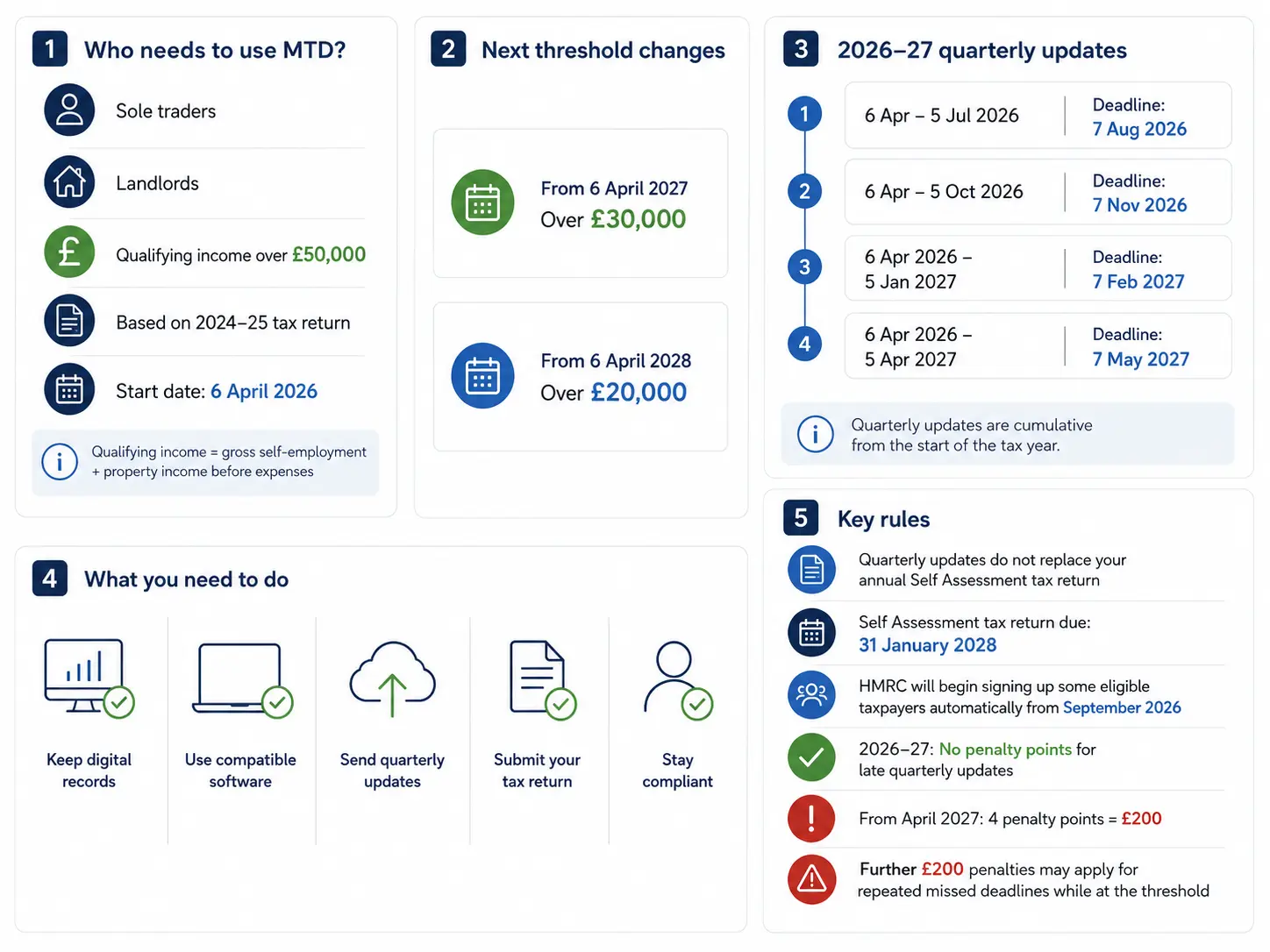
Making Tax Digital for Income Tax 2026: What to Do Now
A sole trader may have completed the first MTD quarterly update without realising that the next deadline is already approaching....

MTD for Income Tax: What Sole Traders and Landlords Should Do After the First Deadline
A client came to Apex Accountants last week, a sole trader with two income streams, unsure whether she had met...

HMRC’s 436,000 MTD Milestone: What Sole Traders and Landlords Should Do Before September
We are increasingly asked the same question by clients who have heard about Making Tax Digital but are not sure...

HMRC Late Payment Interest Rate: What 7.75% Costs You
Miss a tax deadline today and HMRC charges 7.75% a year on the outstanding balance. The Bank of England’s base...

Electricity VAT Cut 2026: What the Six-Month Zero Rate Means from 1 October
The government’s announcement, made in July by new Prime Minister Andy Burnham as one of his first acts in office,...

What Happens to Your Personal Allowance Above £100,000 Income?
For UK taxpayers asking “What happens to my Personal Allowance if I earn over £100,000?”, the answer depends on HMRC’s...

Tax Codes: What Should You Put for Personal Allowances?
For UK employees, pensioners and employers asking, “What should I put for personal allowances?”, the answer depends on the person’s...

Complete Guide on First Making Tax Digital Quarterly Update Deadline 2026
We are increasingly hearing from sole traders and landlords who know that Making Tax Digital started in April but remain...